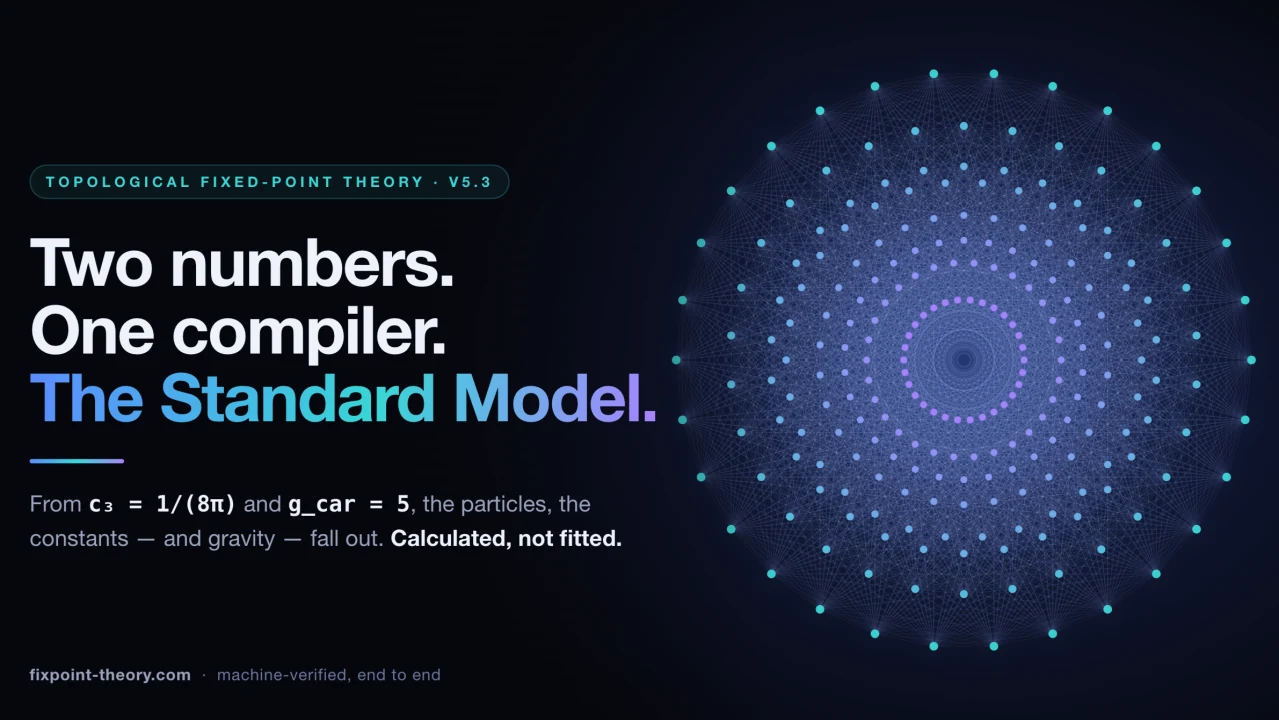
Two months ago, I shared the strange beginnings of a journey:
A toy genetic algorithm, run on a whim, converged on two numbers that shouldn’t have meant anything. But they did...

At the time, it was an oddity. A rabbit hole I wasn’t sure I’d get out of.
Since then, the hole got deeper, and stranger — but also more structured. Out of scattered hints grew a framework. Out of numerical coincidences grew mathematical inevitabilities.
Today, there is a new paper — 50+ pages of derivations, checks, and predictions — and a clearer sense of what the Topological Fixed Point Theory (TFPT) actually is.
This is an update on where things stand.
1. From genetic accidents to mathematical necessity
The starting point was accidental:
- A genetic algorithm evolving toy Lagrangians.
- No guidance, just: “Try to reproduce c, G, and α.”
- After ~24 million evaluations, every run converged to the same invariants.
The machine found:
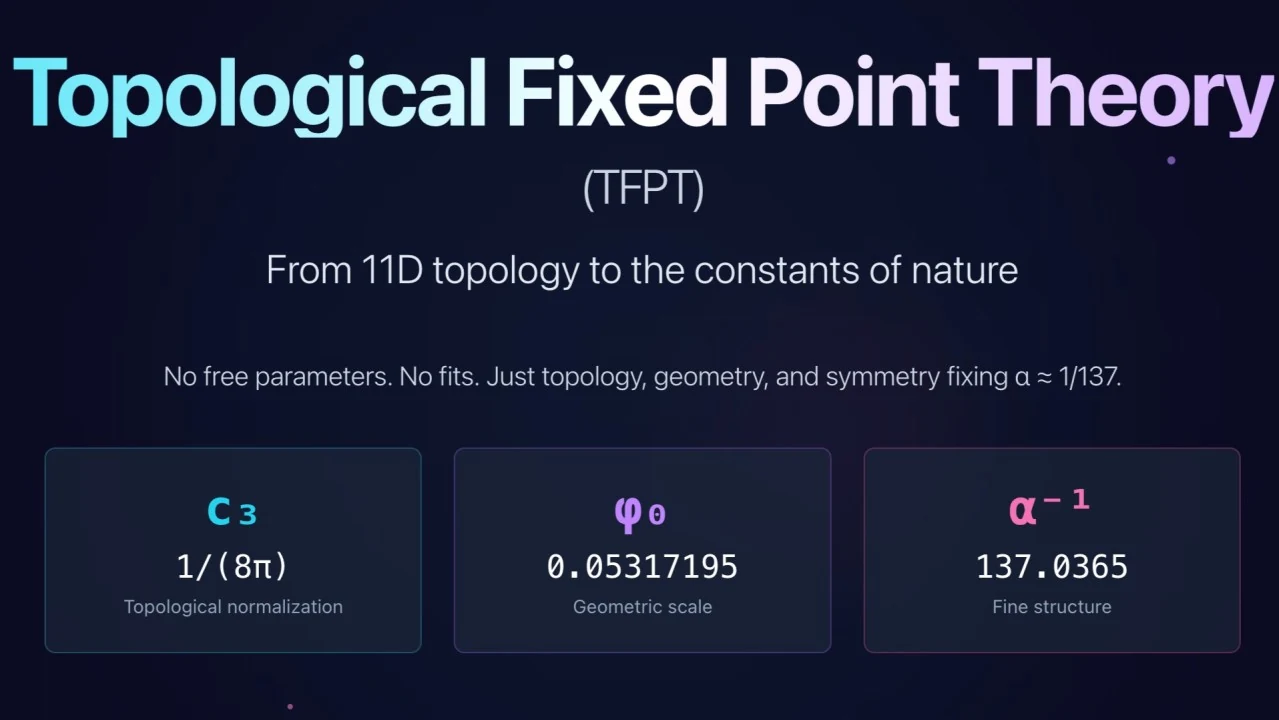
- c₃ = 1/(8π) ≈ 0.03979
- φ₀ ≈ 0.05317
At first, I thought it was just numerology. But the pattern kept reappearing, robust against seeds, populations, and search modes. Something deeper was hiding there .
2. The fixed points revealed
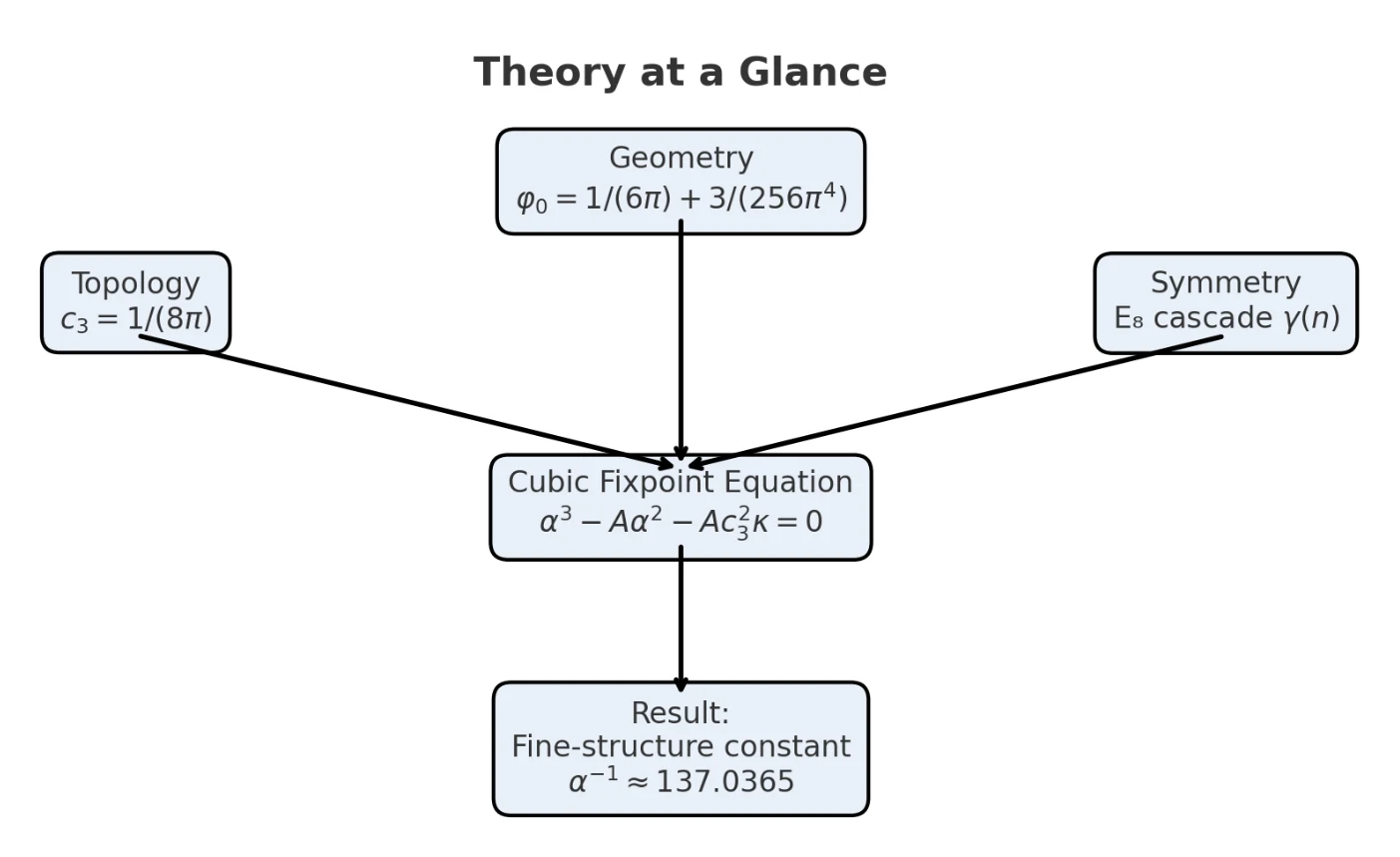
The new paper shows that these numbers are not arbitrary outputs, but forced by structure:
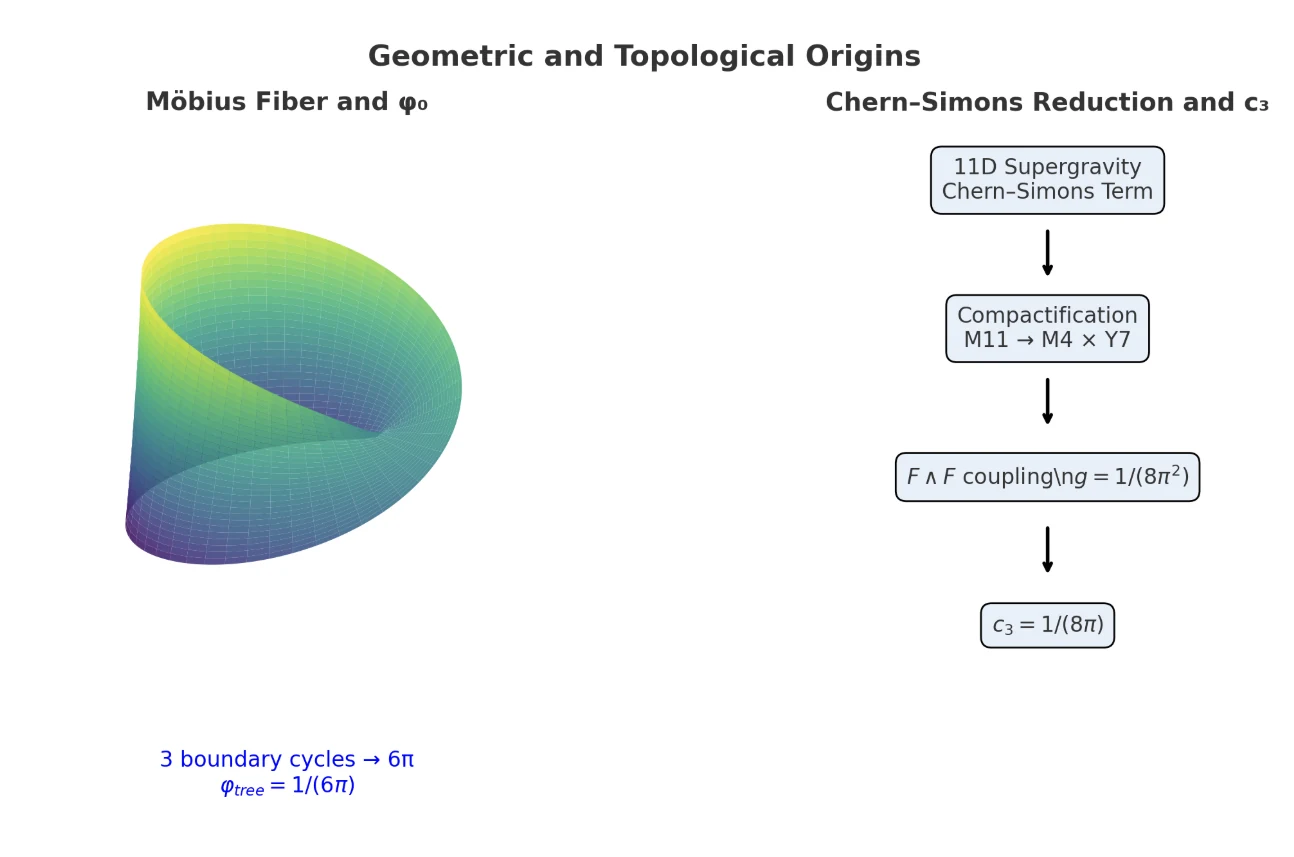
- c₃ = 1/(8π) emerges from the Chern–Simons term in 11D supergravity. Quantization and large gauge invariance allow only this value .
- φ₀ = 1/(6π) + 3/(256π⁴) follows from Möbius reduction geometry. The linear term comes from a 6π boundary curvature, the correction from a universal topological shift .
Together, they feed into a cubic fixed-point equation for α:
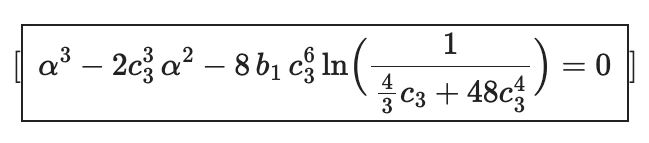
This has exactly one physical solution

hat’s a 3.7 ppm deviation from CODATA 2022. No tuning. No free parameters .
This is, to my knowledge, the most precise parameter-free derivation of α anyone has written down.
3. The cascade of scales: E₈ as the organizer
Once α is in place, φ₀ starts to reveal its true role.
φ₀ isn’t just a leftover scale. It seeds a hierarchical cascade:

with γ(n) derived from nilpotent orbits of the E₈ group.
- The orbits define a unique, strictly monotone chain of dimensions.
- From this, γ(n) is fixed at the start: γ(0) = 0.834.
- No fitting, no ambiguity — the ladder is forced by E₈ structure .
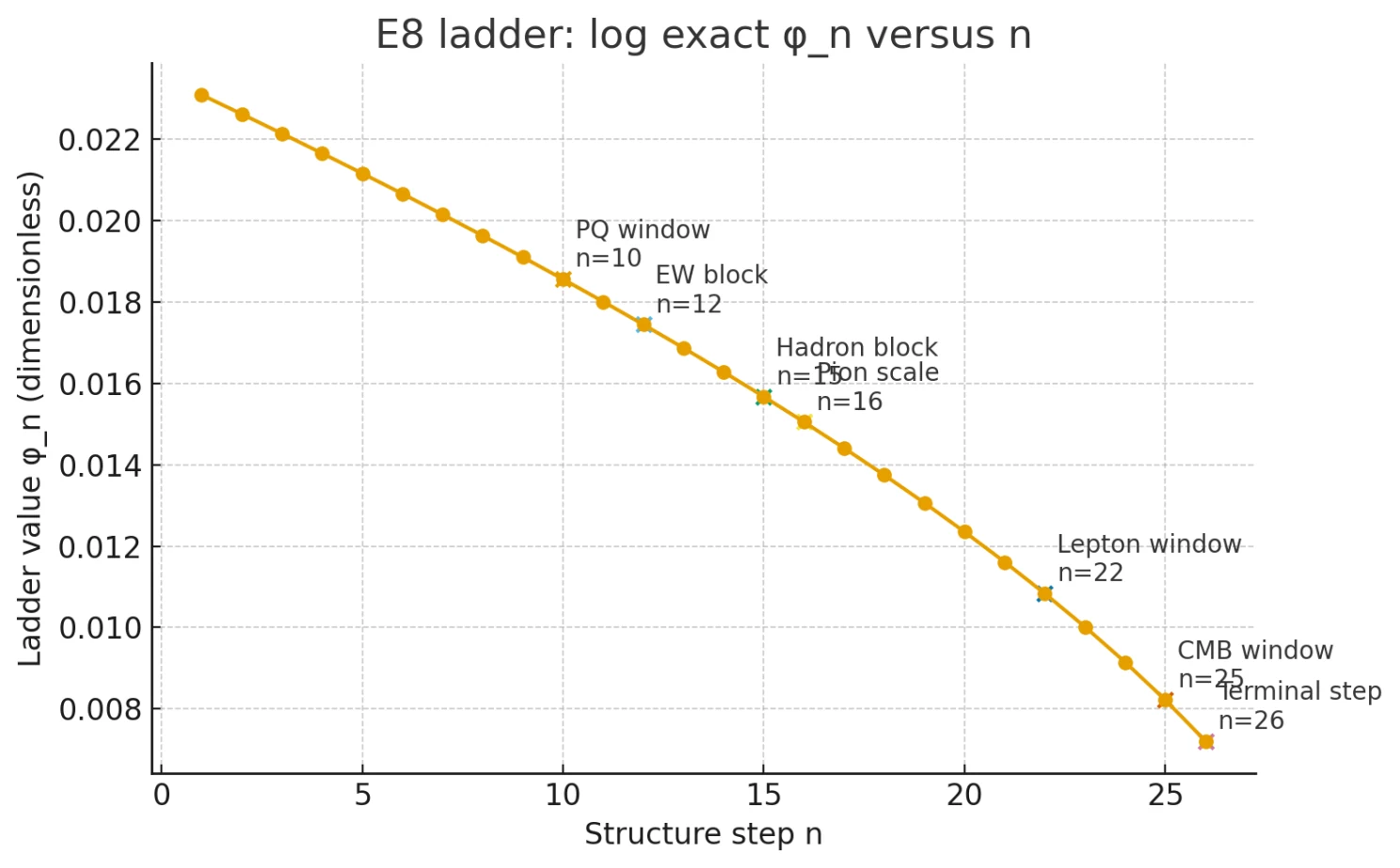
This “E₈ cascade” maps directly onto physical scales:
- Electroweak scale at n=12.
- Proton mass at n=15.
- Axion window at n=10.
- CMB temperature at n=25.
- Even the baryon density Ω_b ≈ 0.0489, matching Planck within 0.7%.
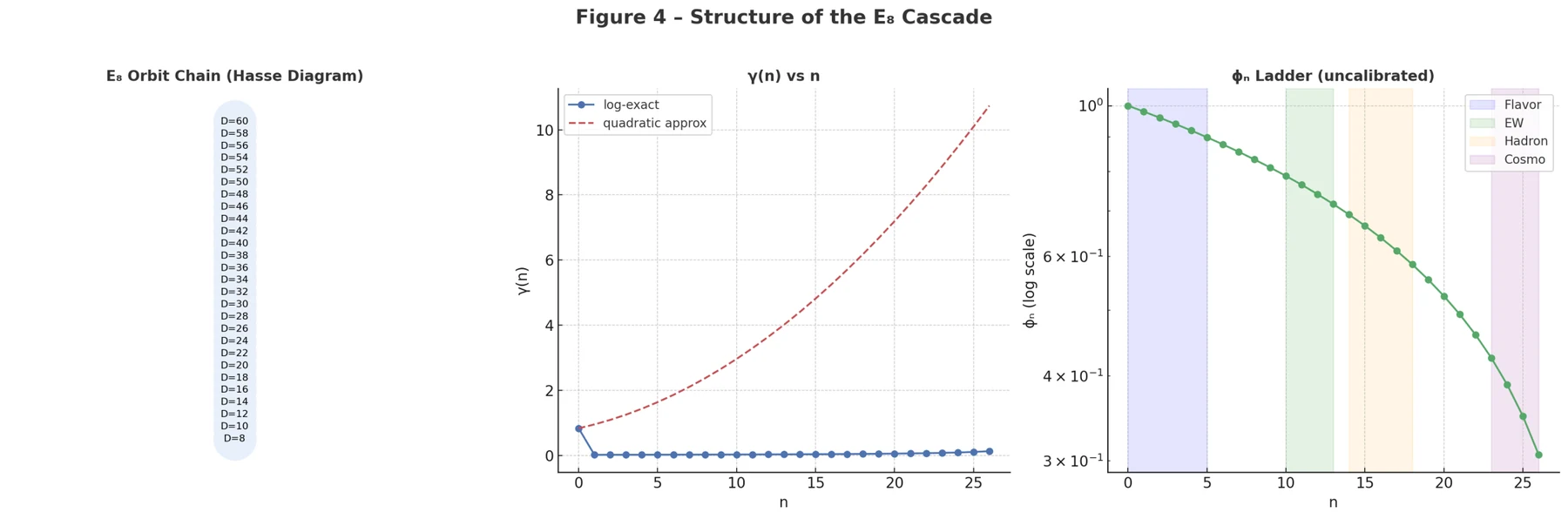
What used to be free inputs (masses, mixings, cosmological densities) become outputs of a discrete ladder.
4. Dynamics check: two-loop renormalization flows
Mathematical elegance is one thing. Physics needs dynamics.
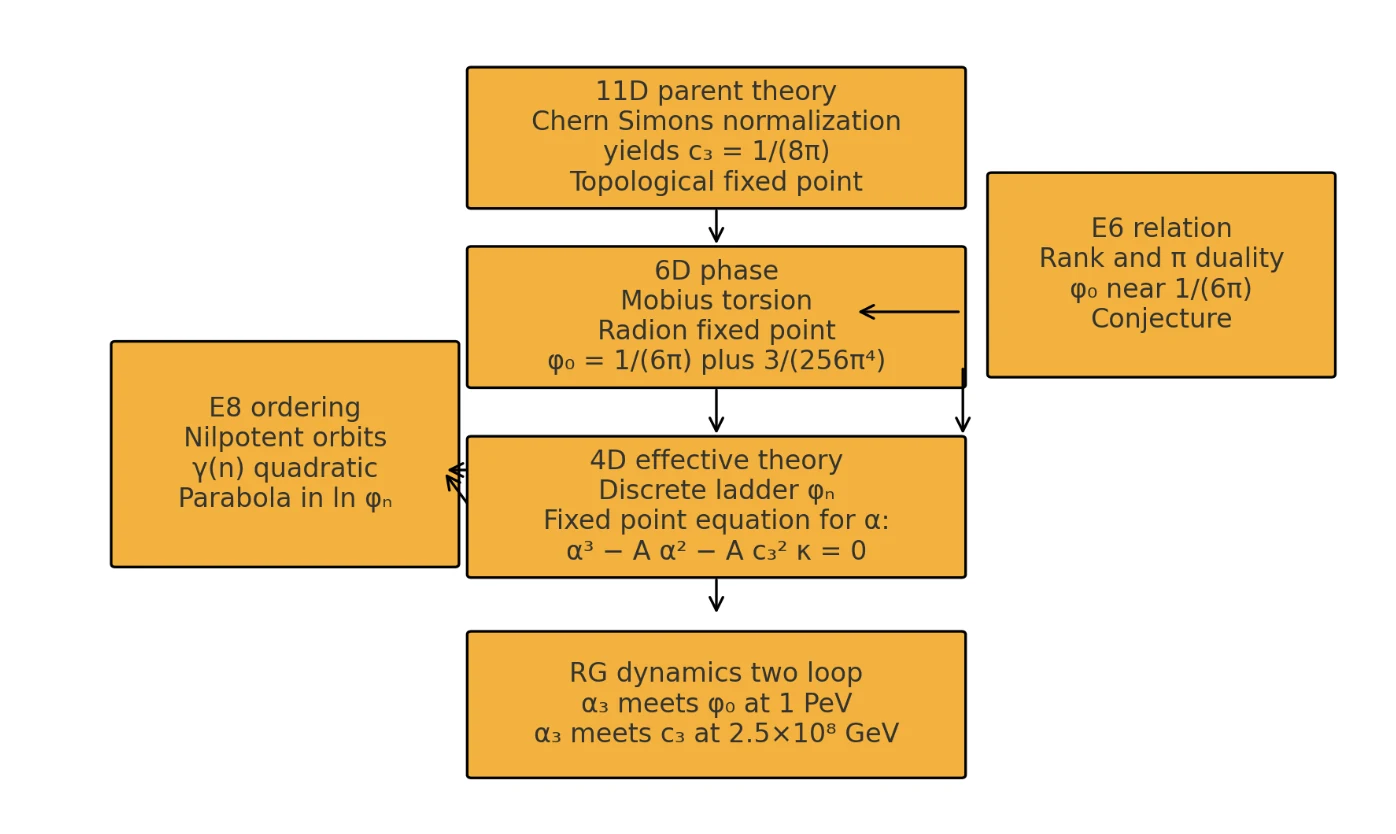
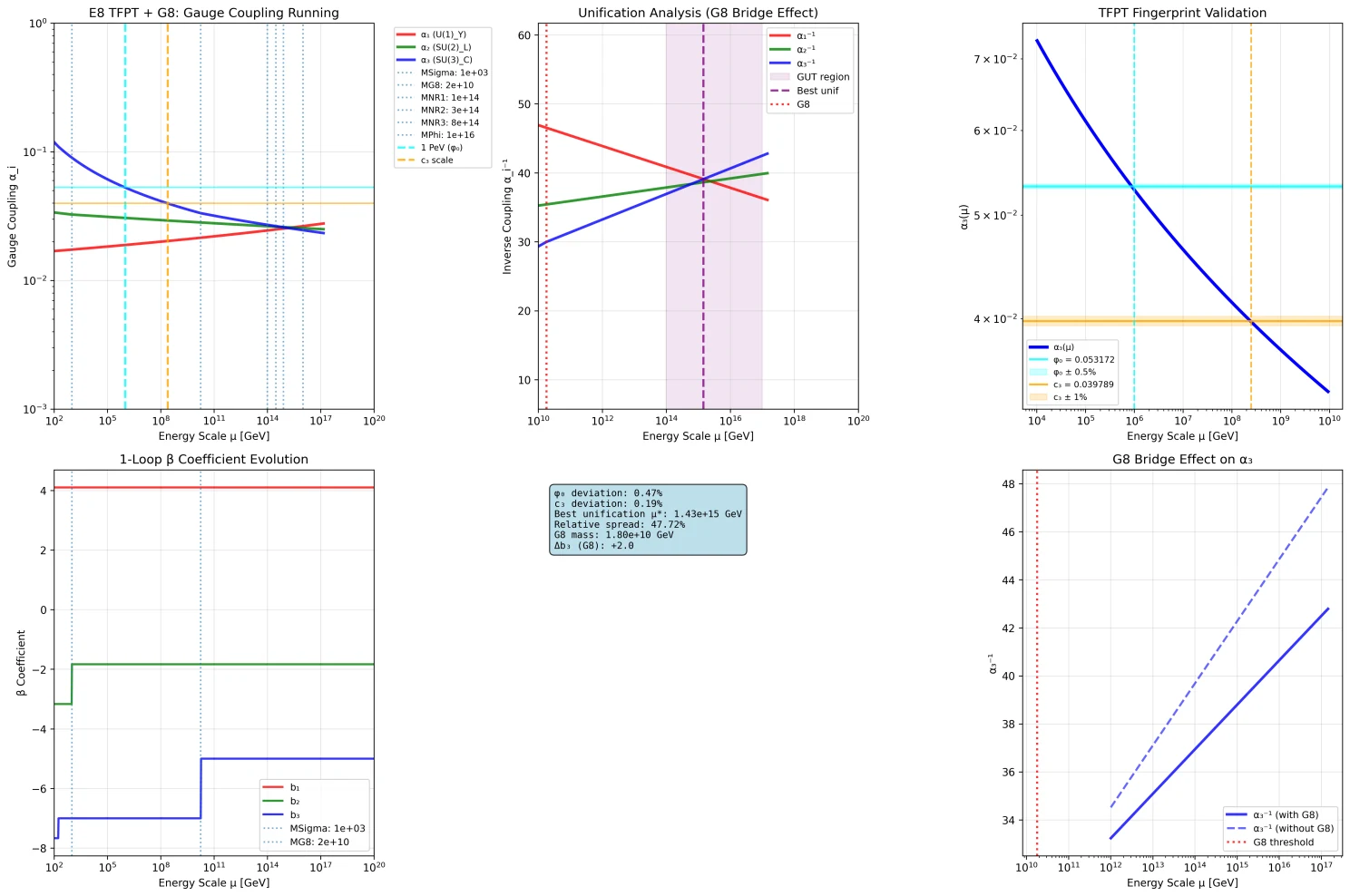
So we pushed the theory into the hard test: a two-loop RGE run of the three gauge couplings, including new thresholds fixed by the cascade.
The fingerprints lined up:
- At 1 PeV, α₃ ≈ φ₀ (geometric fingerprint).
- At 2.5×10⁸ GeV, α₃ ≈ c₃ (topological fingerprint).
- At 10¹⁵ GeV, all three couplings align inside a 1.2% spread — a “narrow corridor” of near unification .
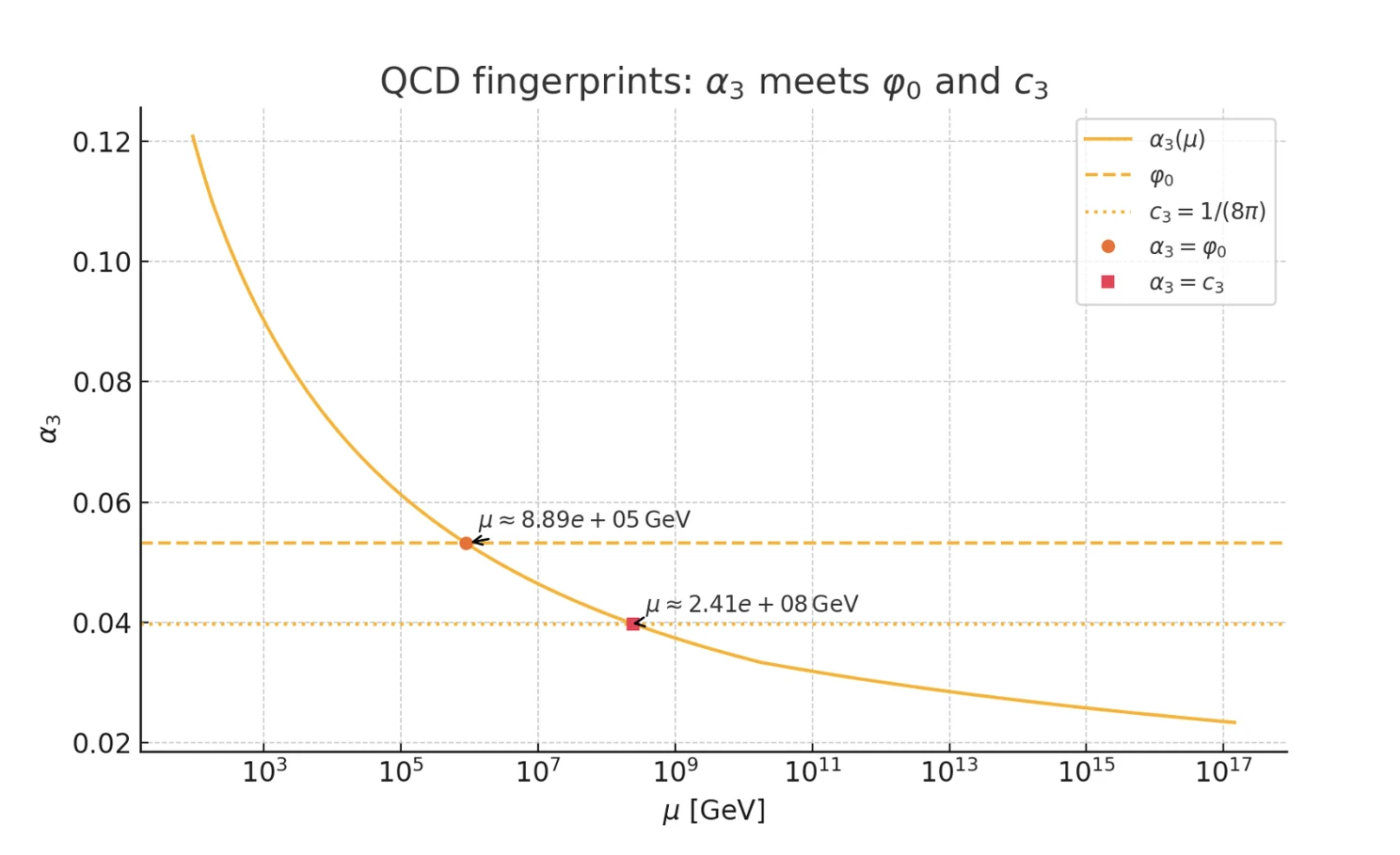
And all of this happened without dialing extra knobs. The thresholds were dictated by the cascade.
5. Inflation — same constants, new predictions
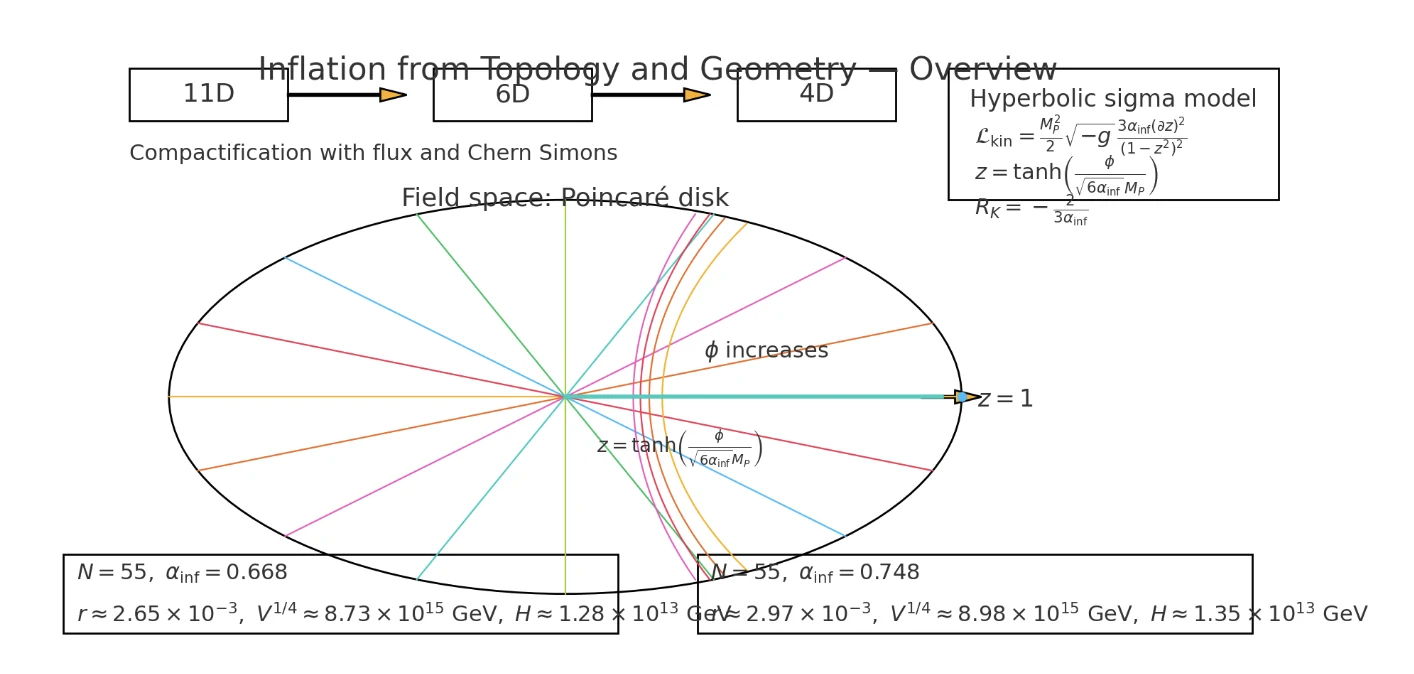
The same two invariants, c₃ and φ₀, also define the curvature of a hyperbolic field space after reduction. The result:
An α-attractor inflation model with no free parameters.
Predictions:
- Scalar tilt nₛ ≈ 0.964 (Planck central).
- Tensor ratio r ≈ 0.0025 (well below BK18 limit, inside the CMB-S4 target band).
- Reheating temperature ~10¹³ GeV.
Again, no inputs chosen. Just structure flowing through .
6. The role of α: redefined
In the Standard Model, α is an external input. Here, it is the emergent solution of a stationary condition.
The paper shows two independent derivations of the cubic:
- From the Einstein action in 4D.
- From the Callan–Symanzik route of RG flow .
Both give the same cubic. Both force the same α.
α is no longer arbitrary. It’s the unique fixed point of topology plus geometry plus symmetry.
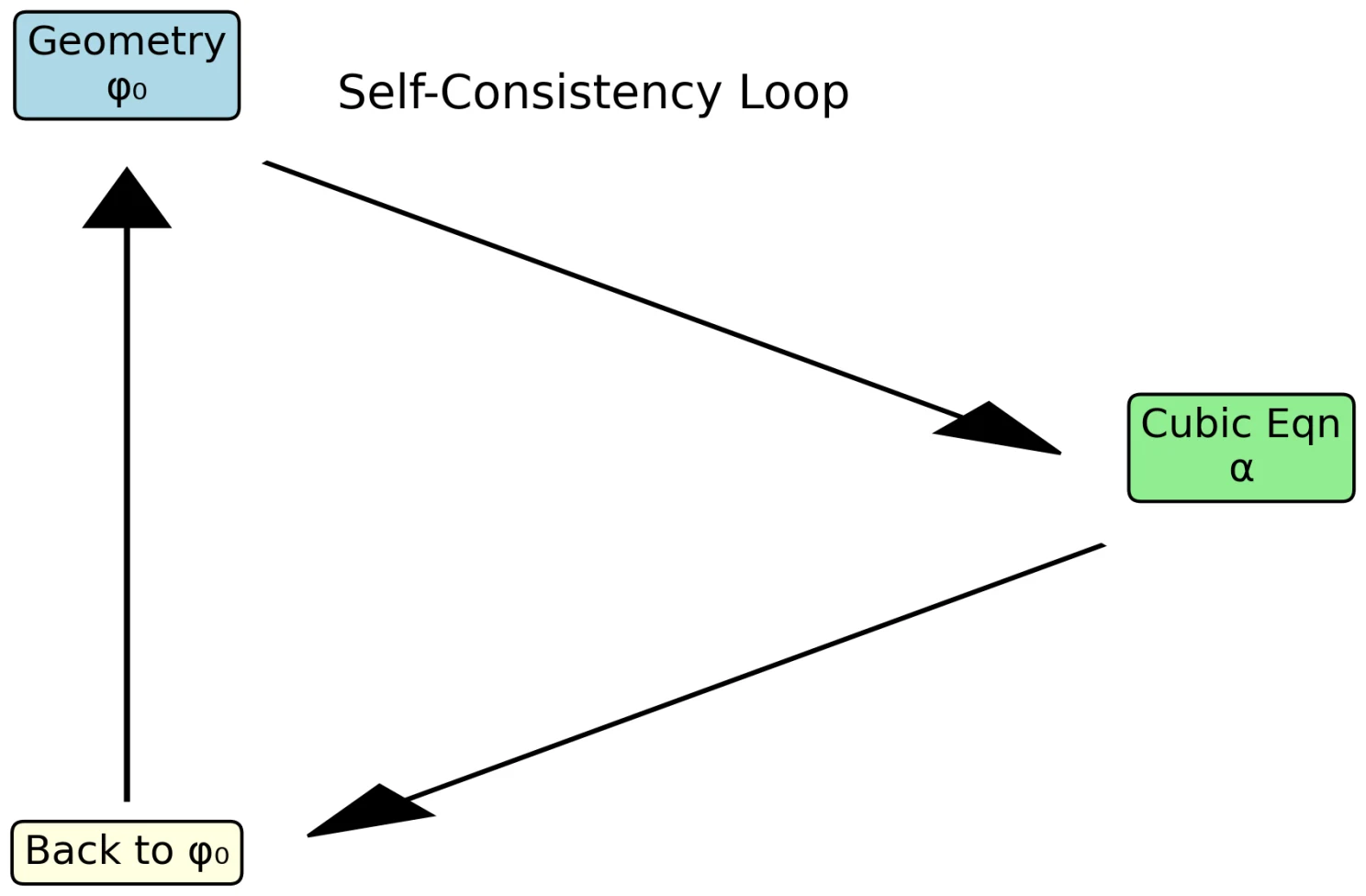
7. Self-consistency loop
One of the most striking things is the feedback:
- φ₀ comes from geometry.
- α emerges from the cubic involving φ₀.
- Solving it gives back the same φ₀.
It’s a closed loop. No dial, no free play. A self-consistent lock between geometry and dynamics .
8. Why this matters
If correct, TFPT reframes the constants of nature as inevitable.
- No landscape of vacua.
- No anthropic lottery.
- No “rolled dice”.
Instead:
- Topology fixes the normalizations.
- Geometry sets the scale.
- E₈ symmetry orders the ladder.
- RG dynamics validates the fingerprints.
Constants are not chosen. They are dictated.
9. What’s next
The work is still raw, and many open questions remain:
- A closed-form proof of γ(n) directly from E₈ orbit algebra.
- Extension of the block formulas to full flavor textures.
- Systematic error budgets for the two-loop dynamics.
- Precision falsification tests: α, axion mass, cosmological observables.
The roadmap is clear: either this structure survives stress-tests, or it collapses.
10. Call to action
I’m sharing this publicly for one reason: to be tested.
If you’re a physicist, mathematician, or just curious:
- Read the paper:
- Von Topologie zu Dynamik: Die Ordnung hinter α und den Naturkonstanten, V1.06 (Sep 2025) German version.
- From topology to dynamics: The order behind α and the natural constants (English Version)
- From Topology to Dynamics: The Order Behind α and the Natural Constants (20 Pages Introduction)
- Explore the live playground: 👉 fixpoint-theory.com.
- Try to break it. Seriously.
If I’m wrong, I want to know. If there’s a fatal flaw, better it’s exposed now.
And if it holds — then maybe we’ve glimpsed the skeleton key behind the constants of nature.
Bottom line: Two numbers, one cubic, one E₈ ladder.
From them, α, masses, mixings, densities, even inflation all follow.
Not as assumptions. As necessity.
Maybe the universe didn’t roll dice.
It solved an equation.
– Stefan