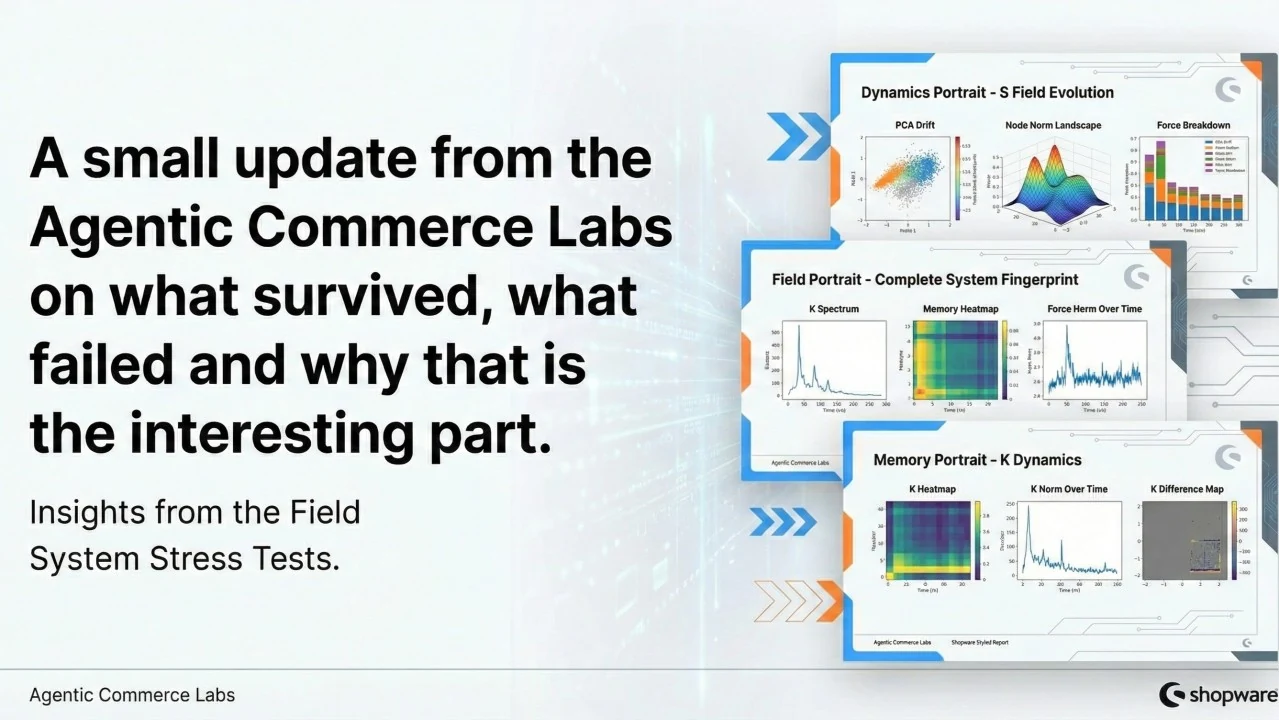
A small update from the Agentic Commerce Labs on what survived, what failed and why that is the interesting part.
Last week I shared a strange result from our labs:
A tiny field system, running on a laptop, started to show signs of reasoning without neural networks, without training loops and without weight matrices to tune.
Since then, I did the only responsible thing you can do when a system behaves in unexpected ways:
I tried to break it. 🔨
I pushed the architecture through a stress suite of experiments. Some simple, some weird, some deliberately unfair. From stability checks and number sense to symbolic logic, memory, theory of mind scenarios and a series of “impossible tests”.
The outcome is not a miracle.
It is more interesting than that.
It behaves like a real system with clear strengths and very clear limits.
What actually works
Across different seeds, setups and embeddings, several capabilities keep reappearing.
1. Logic without layers
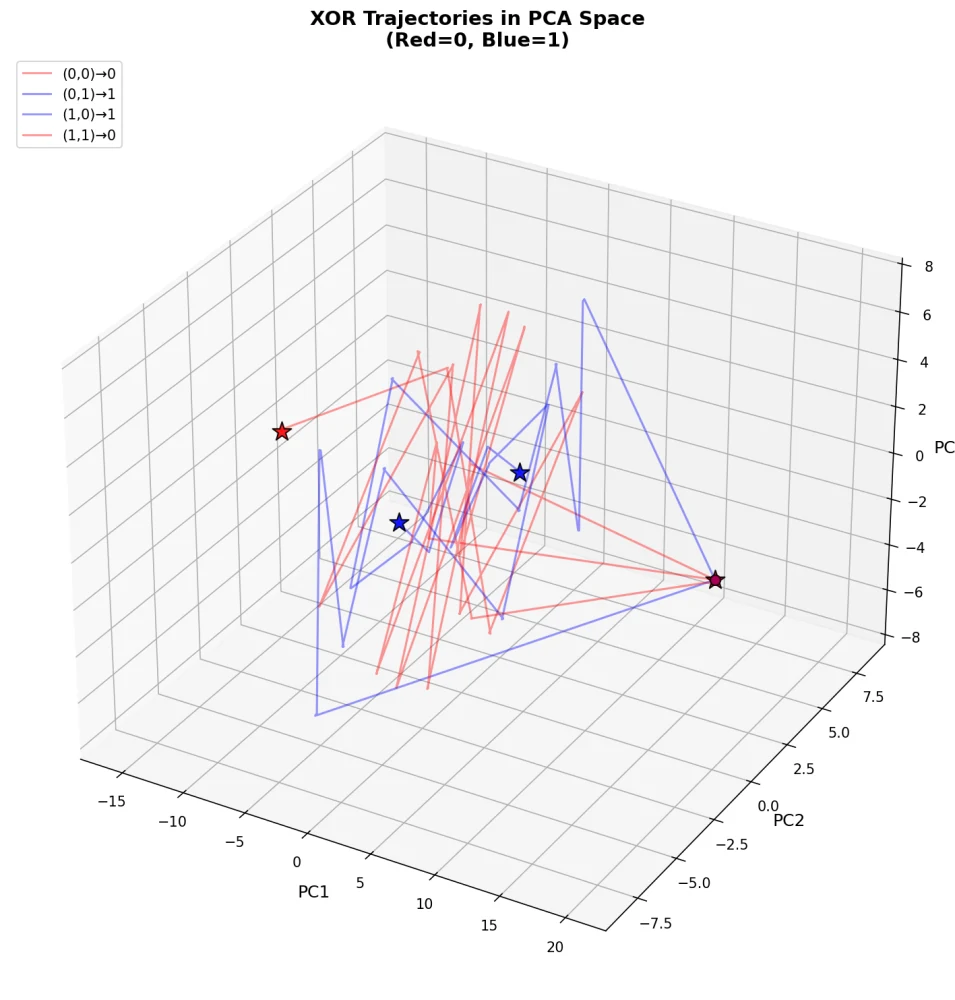
The field still solves XOR and other basic logic tasks without any training.
Different truth values relax into different attractor regions, and the separation happens inside the dynamics.
2. Numbers as geometry
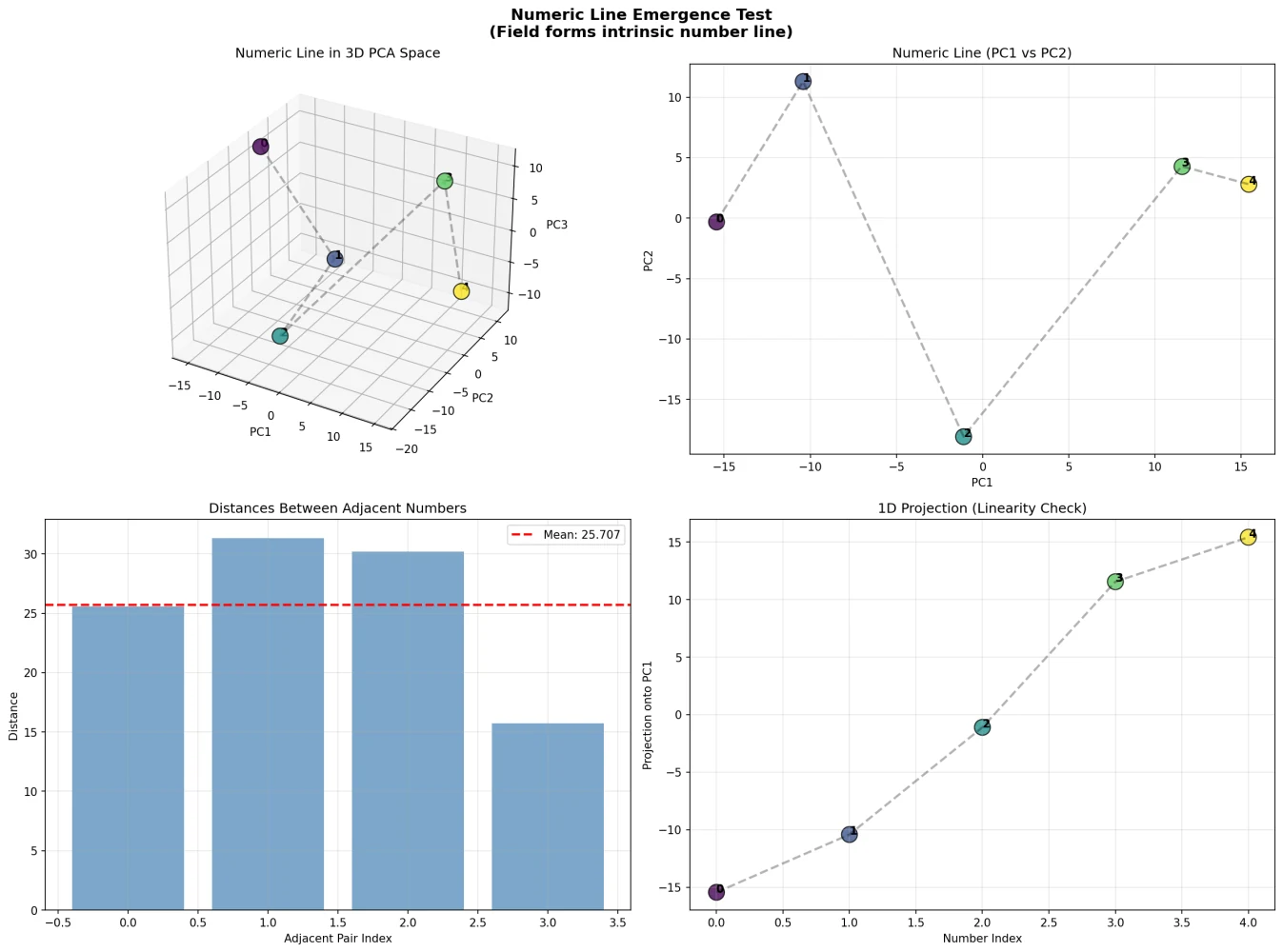
Small numbers injected as pulses arrange themselves along what looks like an internal number line.
Sums that share the same result converge into similar dynamical signatures.
3. Memory as torsion, not storage
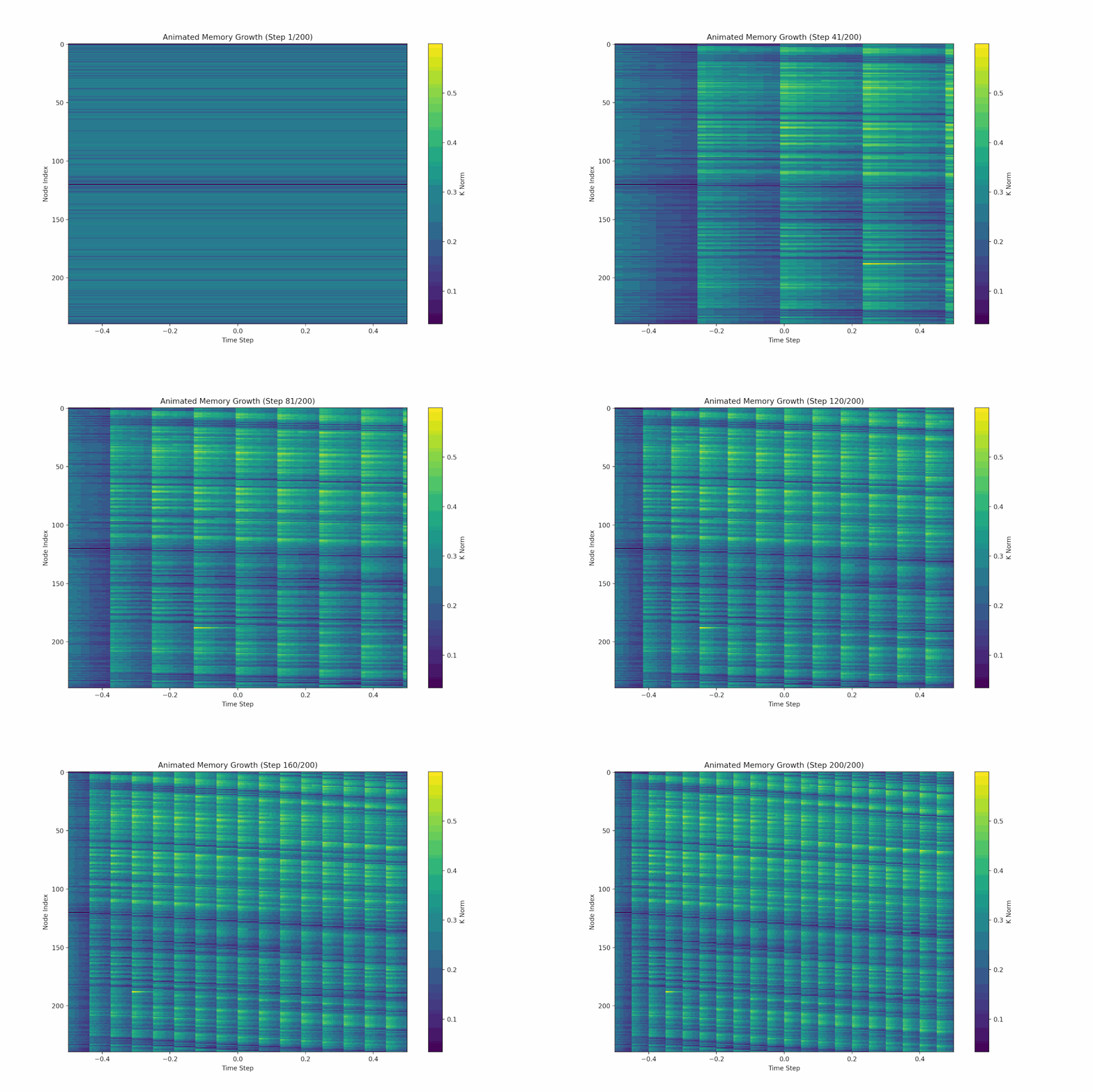
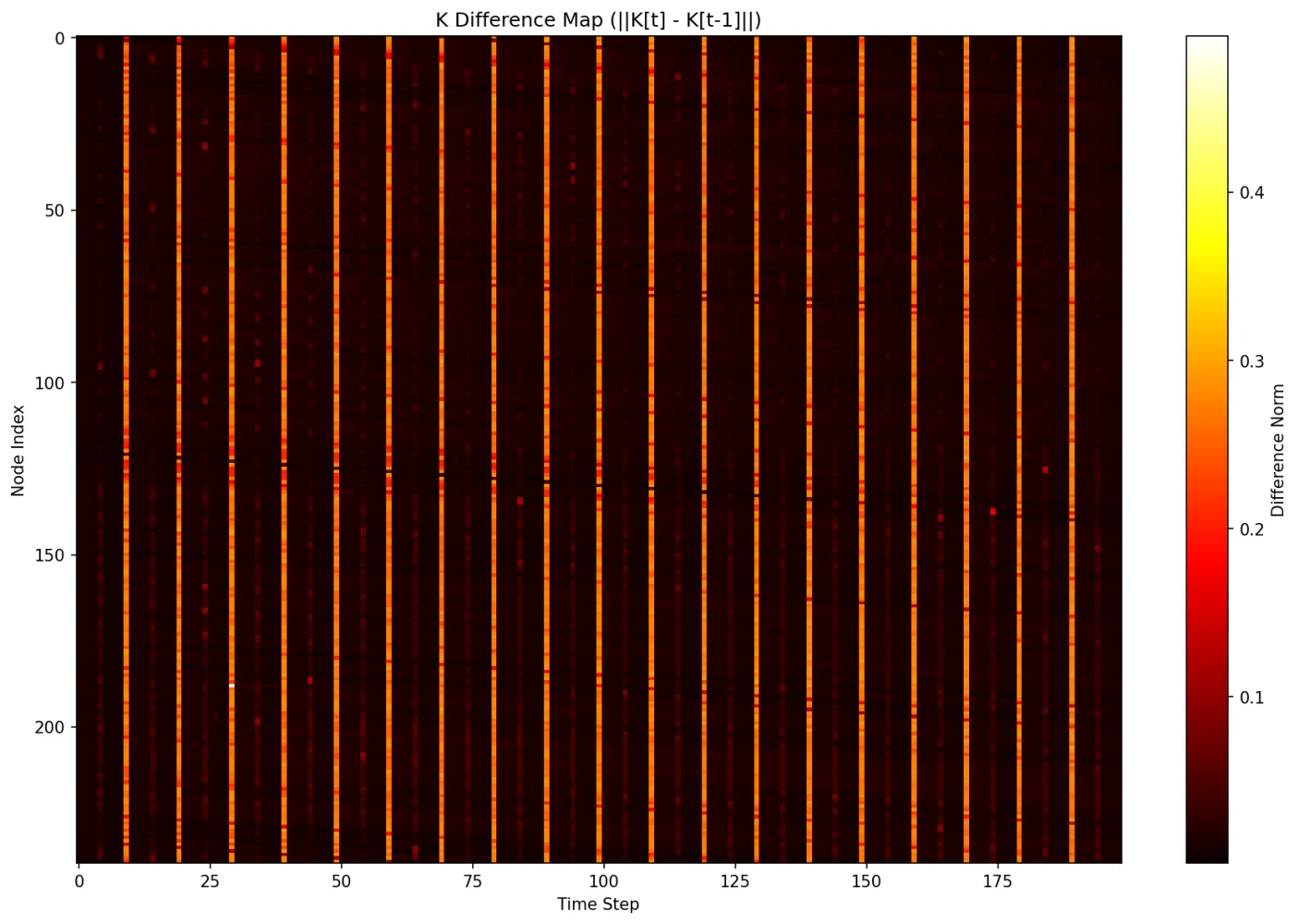
The K tensor continues to behave like a long living geometric memory.
It does not store snapshots.
It stores how the field moved.
Repeated patterns carve out torsional signatures that we can later reactivate with minimal input.
4. Episodes and simple perspectives
When I feed short stories or event sequences, the field distinguishes between different event orders and sometimes even between different perspectives on the same tiny world.
It does not understand stories in any linguistic sense.
But it encodes “who saw what when” as different shapes in its state space.
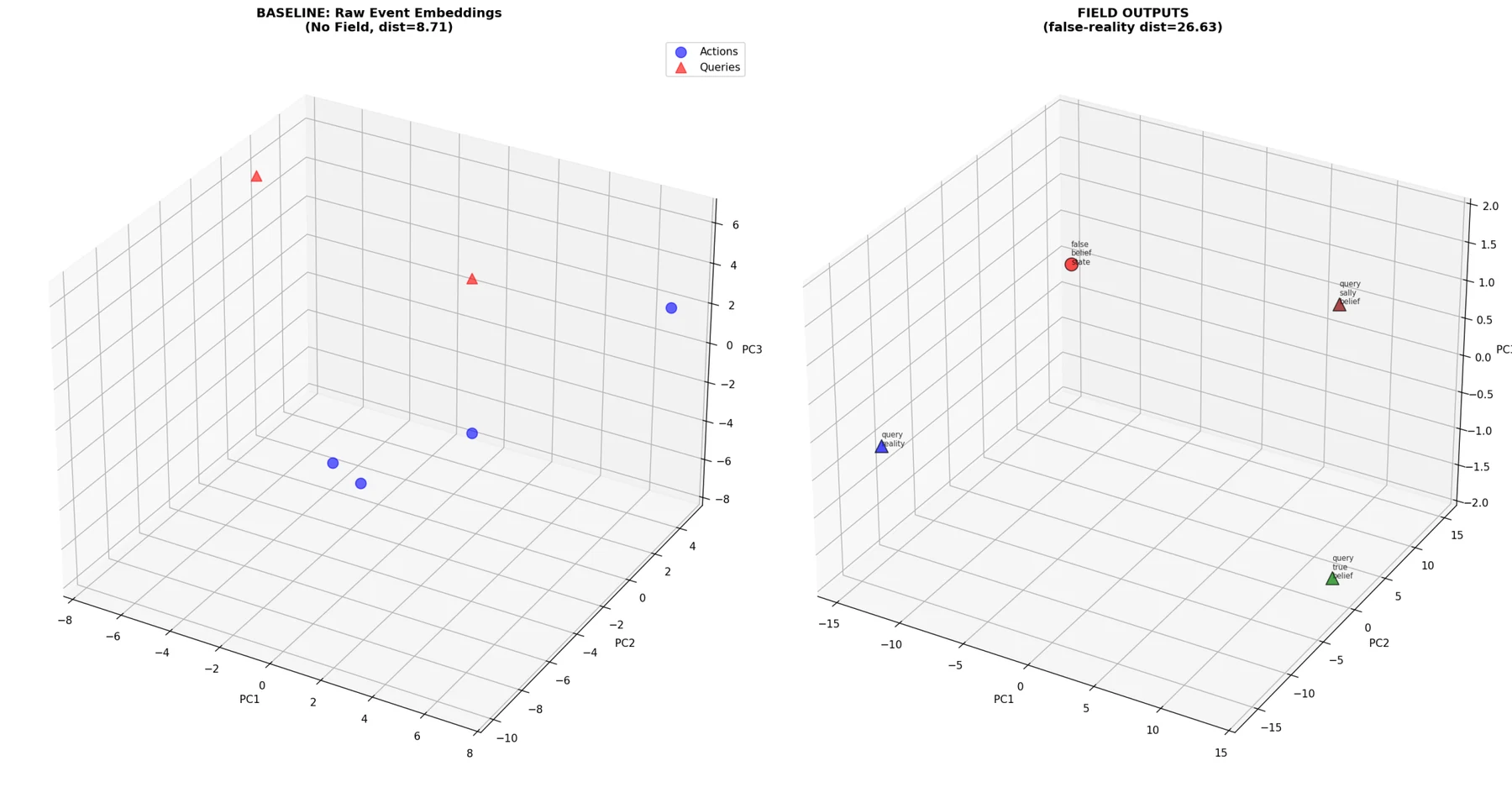
The emerging pattern is remarkably consistent:
The field is good at structure, sequences, attractors and memor
Where the system clearly fails
Equally important is what didn’t survive contact with reality.
When I pushed the system into far more ambitious territory , recovering the grammar of an artificial language from random symbols, discovering world knowledge from unstructured embeddings, distinguishing primes from pure noise, or even gesturing toward physical constants, the field broke. Sometimes gently, sometimes decisively.
These failures are not setbacks; they define the boundary of what the architecture can currently support and make the successes easier to interpret.
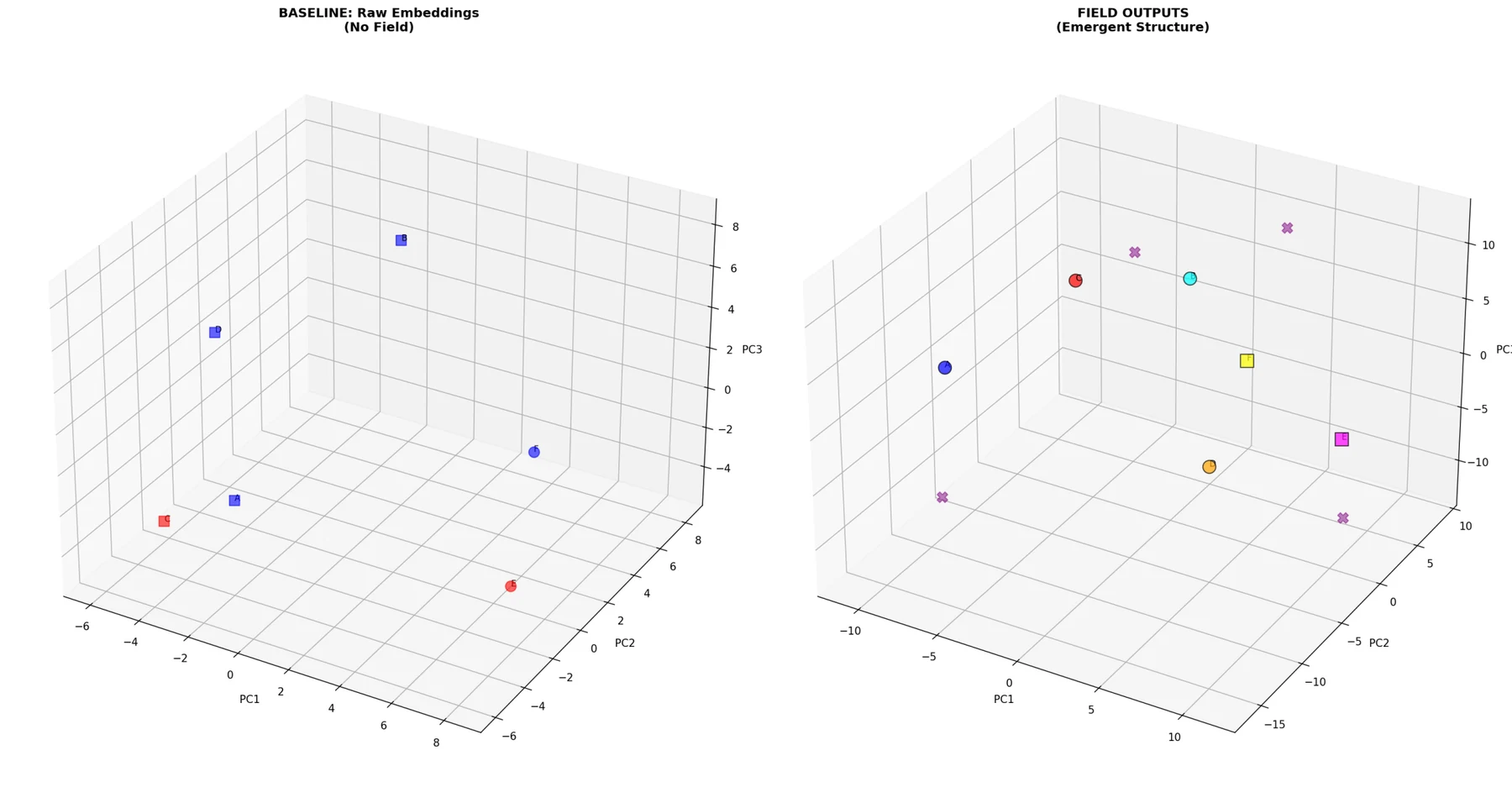
These failures reveal three things:
- The architecture is not a magic oracle.
- Some impossible tests are indeed impossible in the current theory.
- The boundary of what this system can do is now sharper.
The absence of miracles is a good sign.
It means we are looking at an actual system, not a story.
What this suggests about intelligence as a field
After running this latest battery of experiments, a clearer picture is beginning to emerge.
The system behaves less like a classical AI model and more like a computational medium with its own internal physics. Each input does not travel through a stack of layers or a sequence of operations. Instead, it perturbs a continuous field that tries to maintain coherence on a Möbius shaped, highly symmetric manifold.
Across logic tests, number sense, memory formation, temporal reasoning and even symbolic experiments, a common pattern shows up: the field responds to structure by reorganizing itself. It bends, twists and settles into stable configurations that encode relationships , not because it has learned them, but because the geometry of the field demands it.
Memory is not stored externally but expressed as torsion in the K tensor, a literal twisting of the internal space that persists over time. Reasoning is not a lookup or a computation. It is what emerges when the field relaxes into stable attractors that honor its constraints.
In other words, intelligence here is not produced by data.
Data is simply the disturbance that reveals the intelligence already latent in the structure.
And this becomes visible the moment we look at how the system transforms even completely random embeddings:
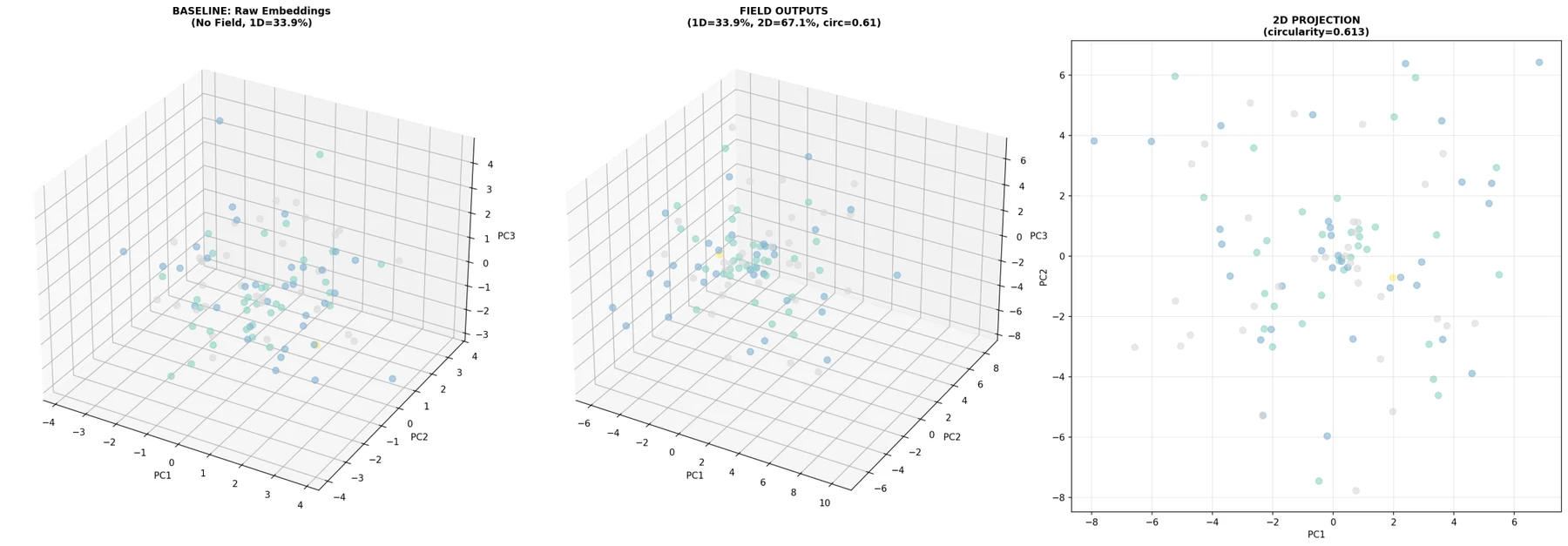
This is one of the most surprising results so far:
A system that constructs its own geometry to make sense of inputs.
But lets have a look on the different experiments:
1. Sequence Discrimination Test
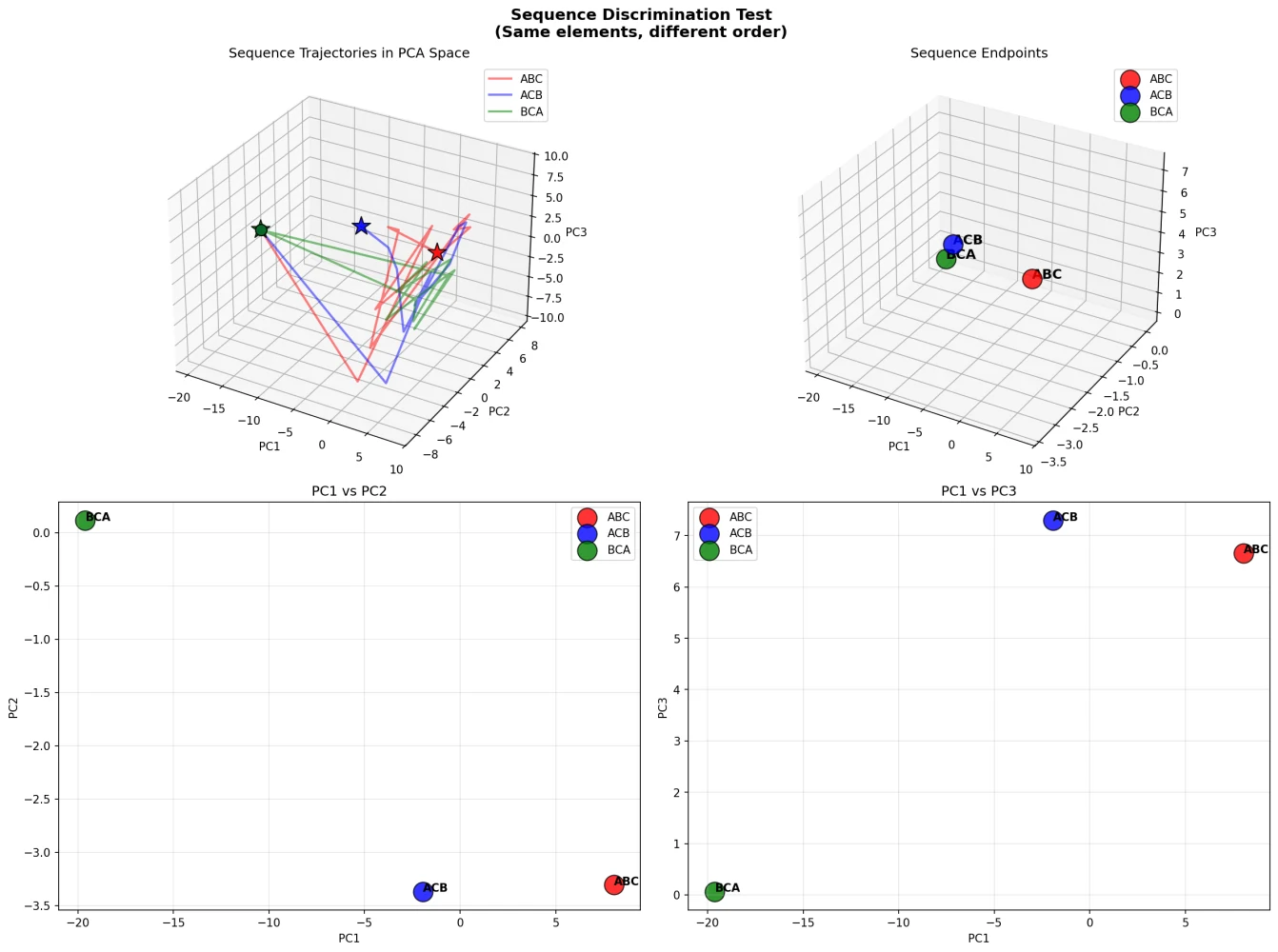
This visualization shows three sequences containing the same symbols but arranged in different orders.
Even though the embeddings contain no positional information, the field relaxes into clearly separated attractor regions for ABC, ACB, and BCA.
This demonstrates a core cognitive property: temporal sensitivity emerging without RNNs, Transformers, or training.
2. Logic Operators Suite – Topological Logic
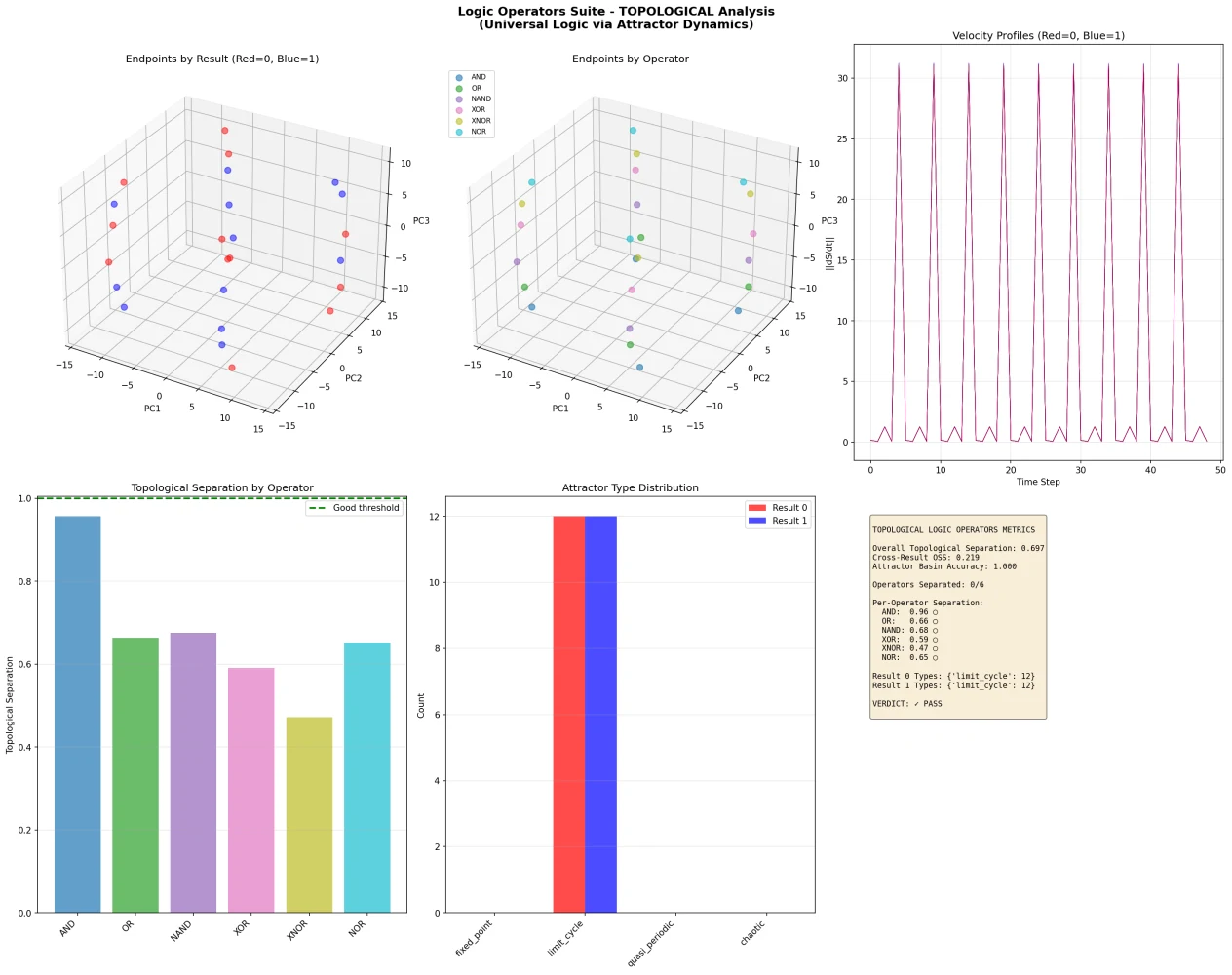
The field separates all six classical logical operators (AND, OR, NAND, XOR, XNOR, NOR) by producing distinct dynamical signatures.
The classification doesn’t come from distance or linear separators, but from the geometry of the trajectories themselves.
This suggests that logical operations can emerge as a physical process, not as trained parameters.
3. Circular Embedding Test
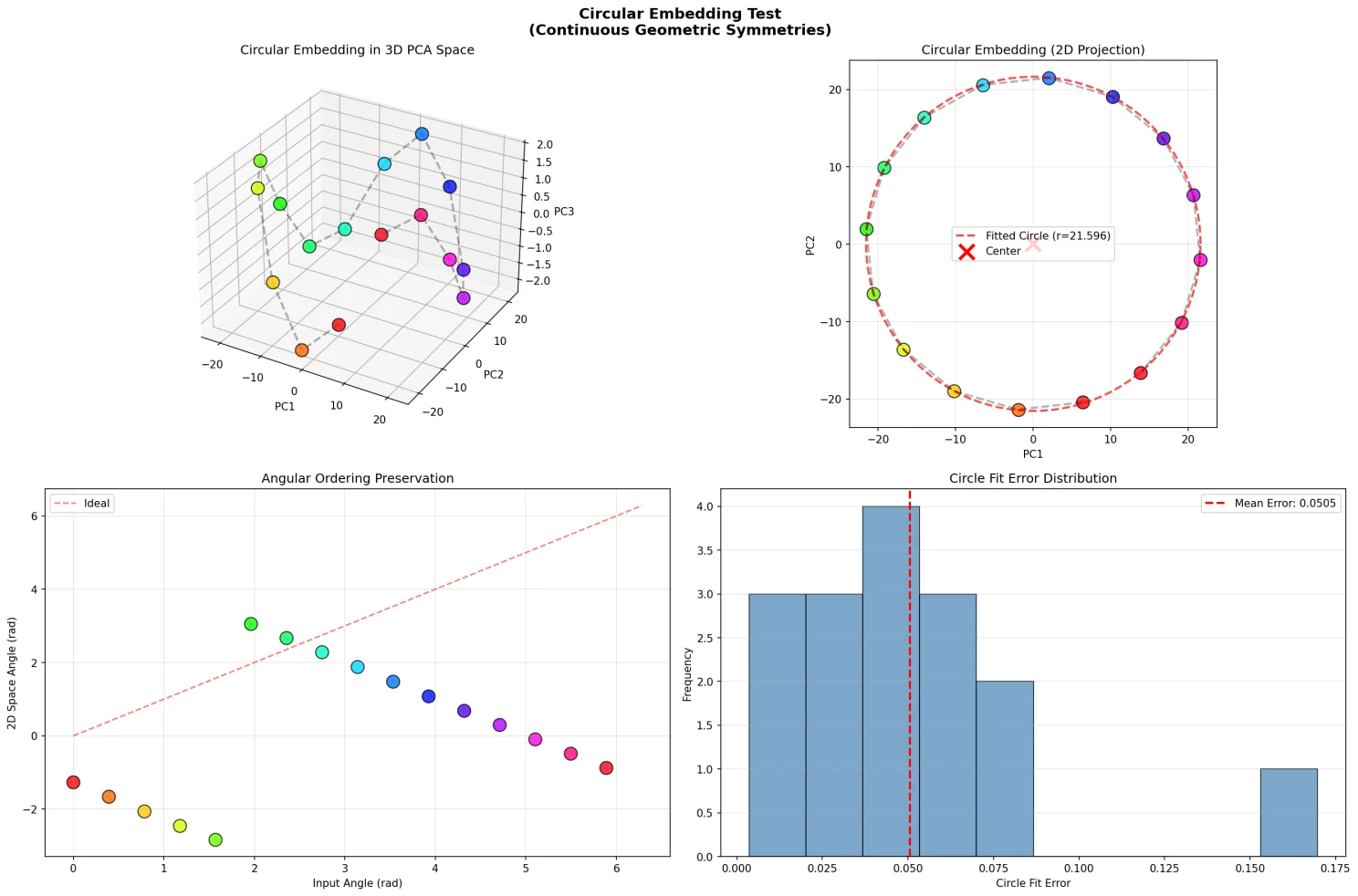
Inputs arranged on a circle are reconstructed by the field as a circular structure in its internal state space.
The system preserves angular order, curvature, and symmetry without ever seeing a circle before.
This mirrors behavior found in biological systems: the field behaves like a physical space that organizes continuous structure on its own.
4. Memory Writing Test (Torsional Memory K)
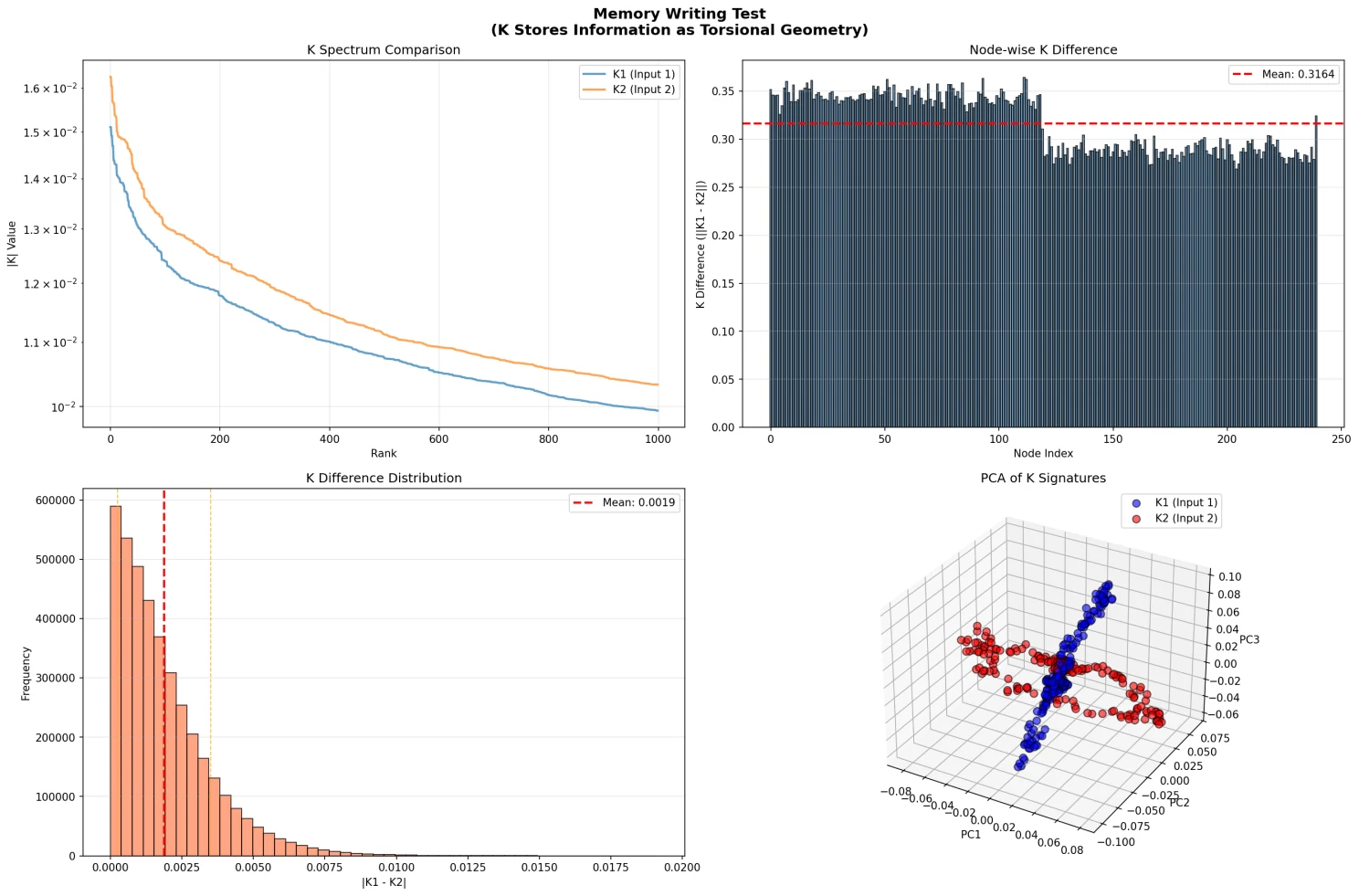
The K tensor develops distinct torsional signatures for different inputs, with stable high dimensional differences across nodes.
This memory is durable and dynamic, representing transitions, not static encodings. It reveals a fundamentally new memory mechanism: memory as geometric deformation, not as stored weights.
5. Symbolic Algebra & Reasoning
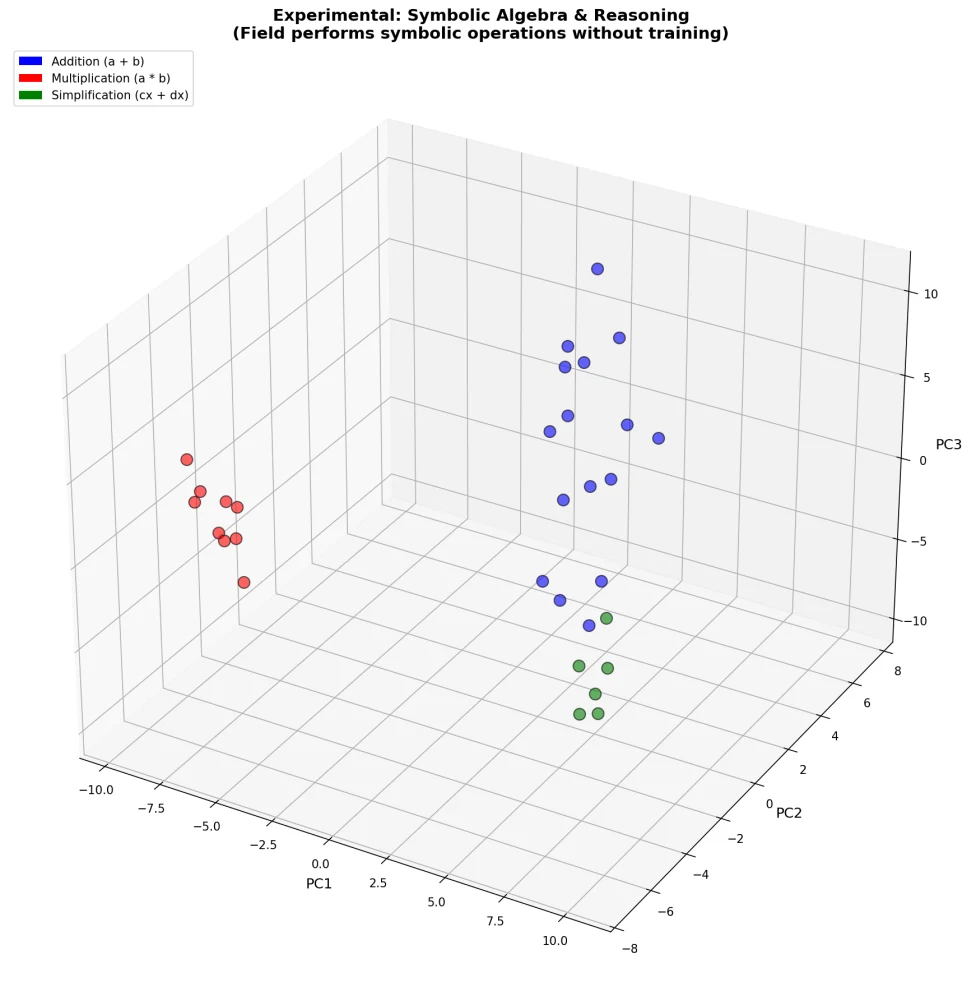
Even though the symbols have no inherent mathematical meaning, the field naturally groups addition, multiplication, and algebraic simplification into consistent attractor regions.
This indicates that the system can extract symbolic structure purely from its internal physics.
A behavior typically seen only in large trained language models appears here without learning.
6. Generalization & Abstraction
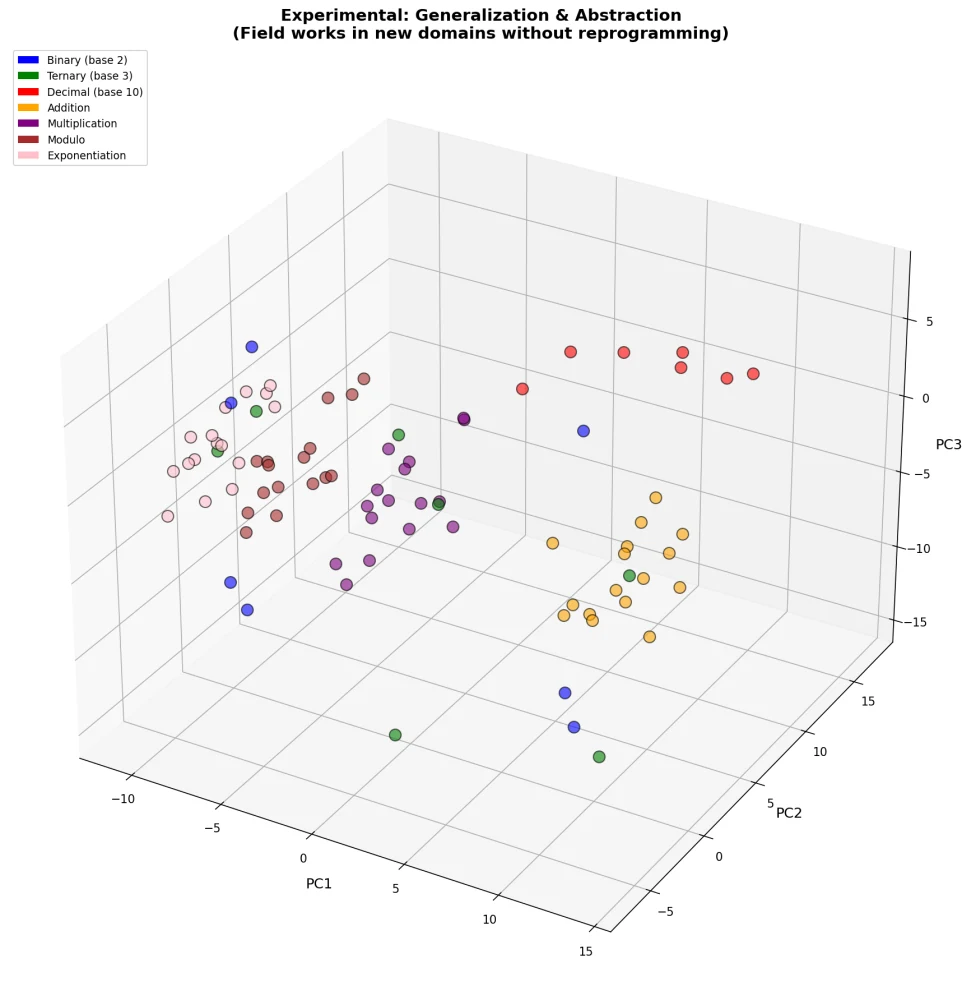
Inputs from different numerical bases and operators (binary, ternary, decimal, modulo, exponentiation) settle into meaningful semantic groupings.
The system handles entirely new domains without modification or training.
This suggests that generalization emerges from the field’s underlying topology, not from examples.
7. Temporal Reasoning & Planning
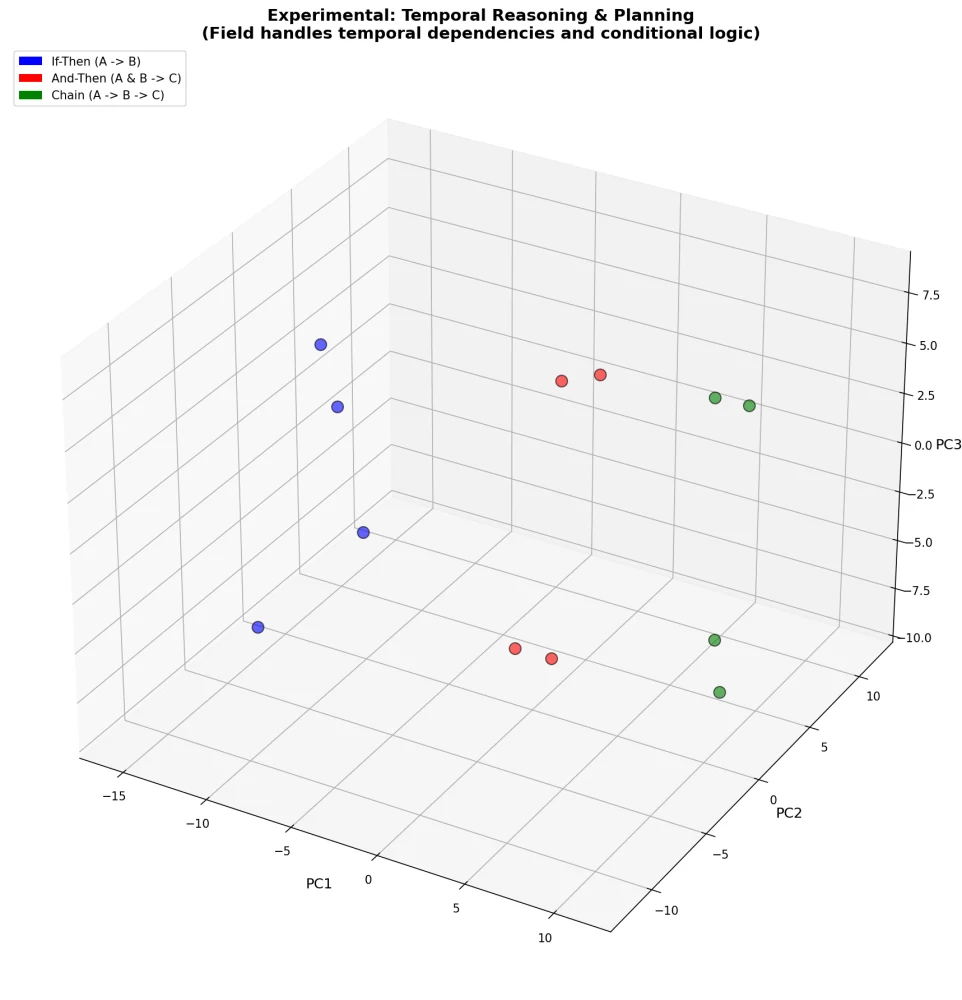
Rules such as “If A then B” or “If B and C then D” produce distinct attractor basins reflecting the conditional structure.
The field integrates temporal dependencies directly through its relaxation dynamics.
This points toward a capability typically reserved for specialized rule systems or sequence models: temporal reasoning through physics alone.
8. Metareasoning & Uncertainty
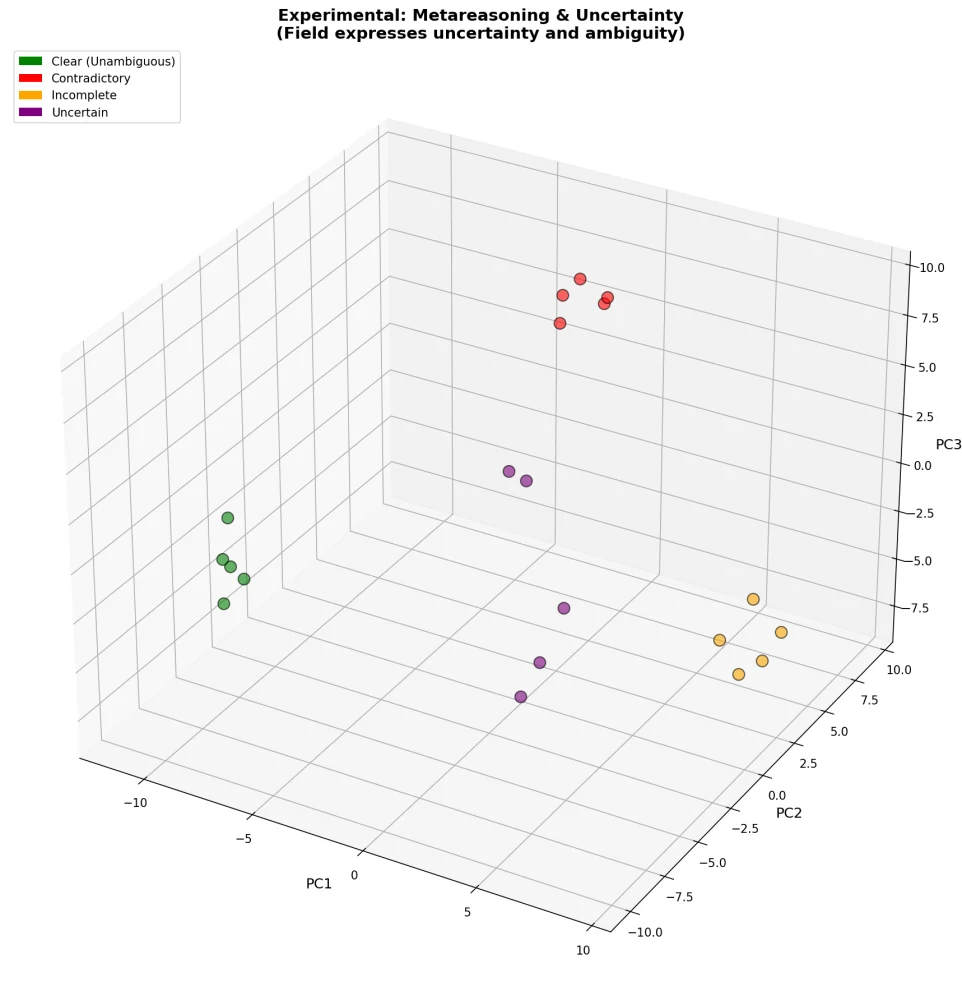
Contradictory, incomplete, or ambiguous inputs create multi attractor patterns instead of noise.
These patterns represent different possible interpretations, allowing the system to reflect ambiguity structurally.
It shows a key property of higher cognition: the ability to represent “not knowing” in a structured, dynamic way.
Where we go next: from tests to learning
Up to this point, most of our experiments have been diagnostic. I tried to understand what the field already knows how to do on its own: separating logic from arithmetic, holding short episodes in torsional memory, expressing uncertainty through multiple attractors, even reorganizing geometry when confronted with contradictions. These tests mapped the contours of its abilities, not its limits.
The next phase shifts from probing to teaching.
Instead of treating inputs as isolated pulses, I will expose the field to a tiny curriculum: letters, simple words, micro sequences. Not as tokens in the classical sense, but as controlled disturbances that leave geometric traces inside the K tensor. If the theory holds, a word will stop being a string and become a trajectory through state space, a region the system naturally settles into. Meaning would then be a geometric object, not a learned embedding.
Once this basic literacy forms, the plan is to connect the physics driven core to structured knowledge sources, starting with an embedded view of Wikipedia. The goal is not scale for its own sake, but to explore whether this architecture can give agents what today’s systems struggle with: stable structure, long horizon context, grounded memory and coherent goals over time, without drowning in parameters or brittle prompt engineering.
This is where the bridge to Agentic Commerce becomes tangible. If a field based system can maintain context across thousands of micro decisions, remember past states, and reason through uncertainty, then agents in commerce could move beyond autocomplete style heuristics. They could navigate catalogs, price dynamics, user intent and multi step workflows with a stability that mirrors physics rather than pattern matching. They could act, not just predict.
I don’t know yet how far this approach will go.
But the behavior is consistent enough AND strange enough to keep pushing.
And breaking.
And learning from whatever cracks open next.
Greetings from the labs.
#ArtificialIntelligence #NextGenAI #FieldComputing #DeepTech #ScientificComputing #AgenticCommerce #PhysicsOfIntelligence #ResearchAndDevelopment #shopware