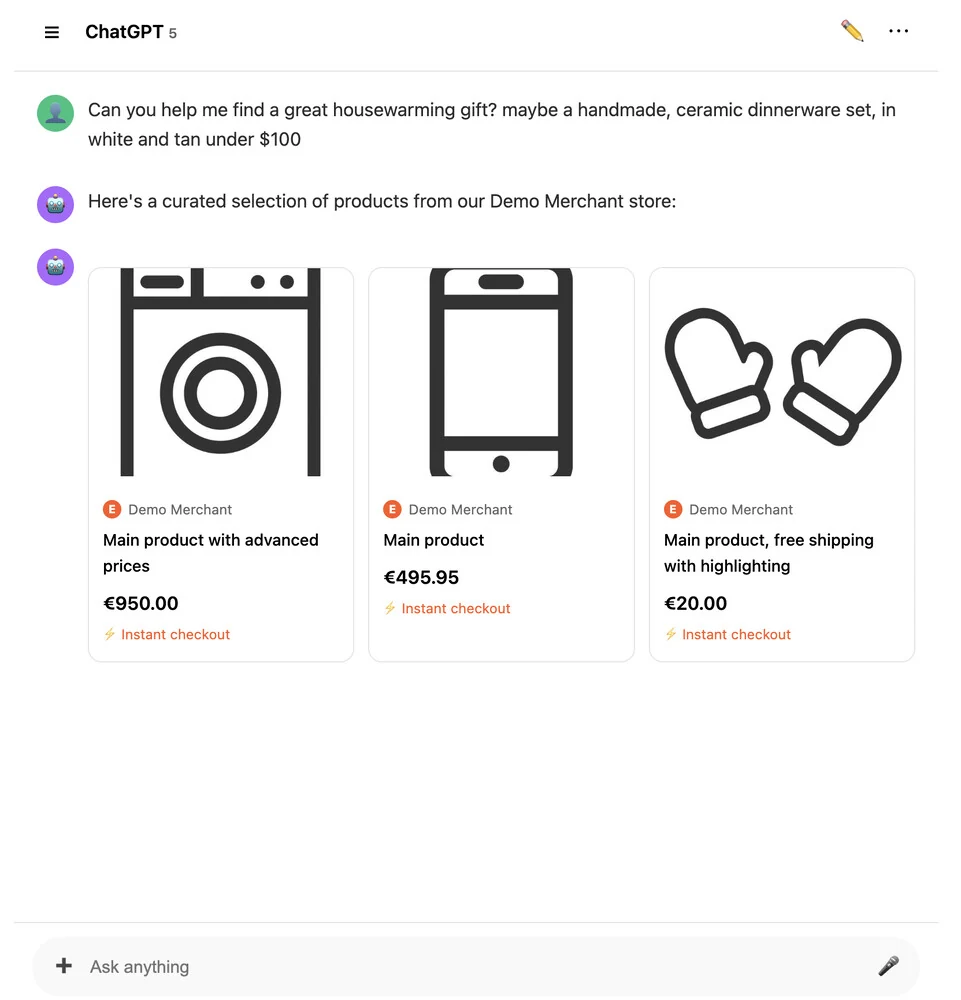
The last 48 hours changed commerce. OpenAI and Stripe announced the Agentic Commerce Protocol, the common language that lets AI agents and businesses complete purchases without the old website shuffle. It already powers Instant Checkout in ChatGPT.
At Shopware we did not wait. We built a complete ACP implementation for Shopware 6 and shipped a working prototype that connects ACP flows to PayPal to showcase the process. Below is what it does today, how it works under the hood, and how it ties into the broader Agentic Commerce Alliance and our work on the Agentic Experience Protocol.
What we built
A full ACP server for Shopware 6
https://github.com/sthamann/ACP-shopware
- Accepts orders from AI agents, end to end, using your real Shopware cart and pricing logic
- OAuth2 secured endpoints for session creation, updates, completion and cancellations
- Two modes out of the box: a demo mode for fast UX trials and a production mode that charges cards via PayPal (and other installed payment methods ins hopware)
ACP is an open standard, codeveloped and stewarded by OpenAI and Stripe, designed to work across agents and payment processors. That portability matters for merchants and platforms.
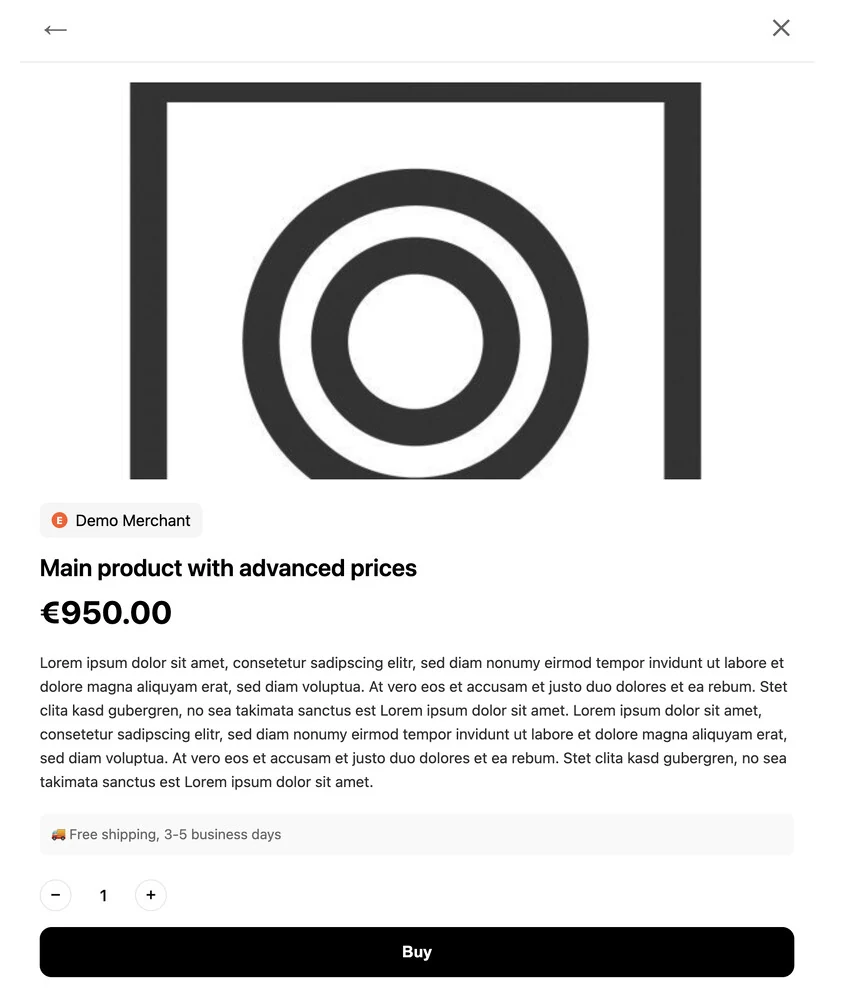
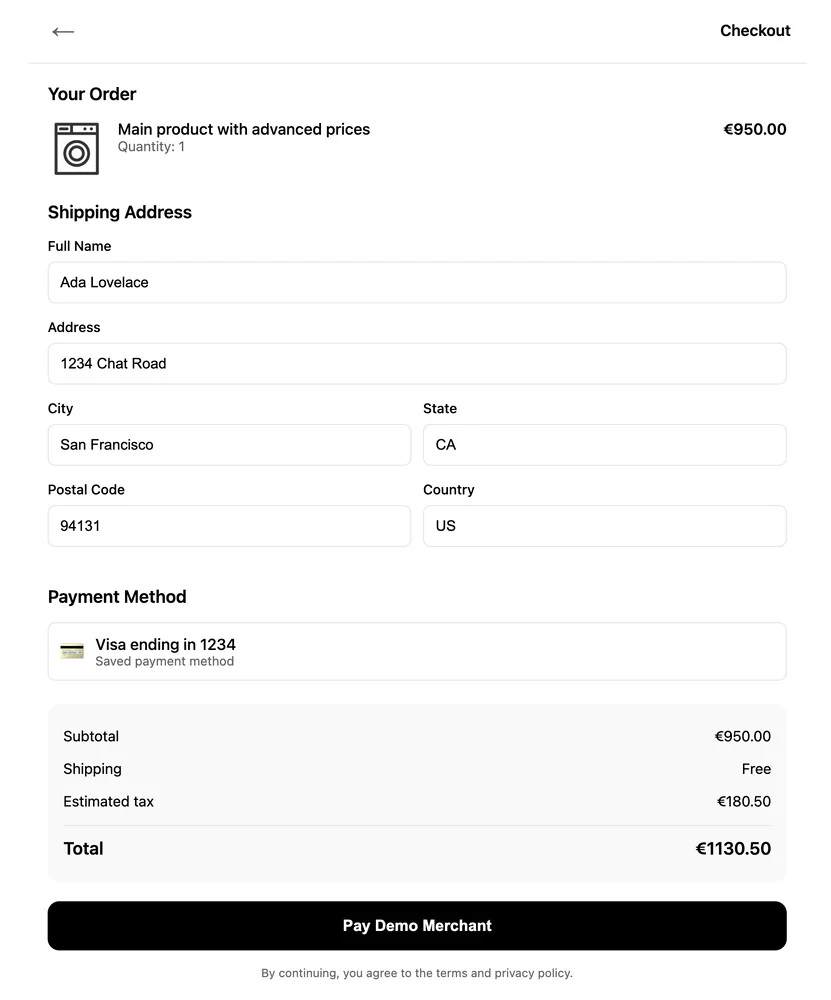
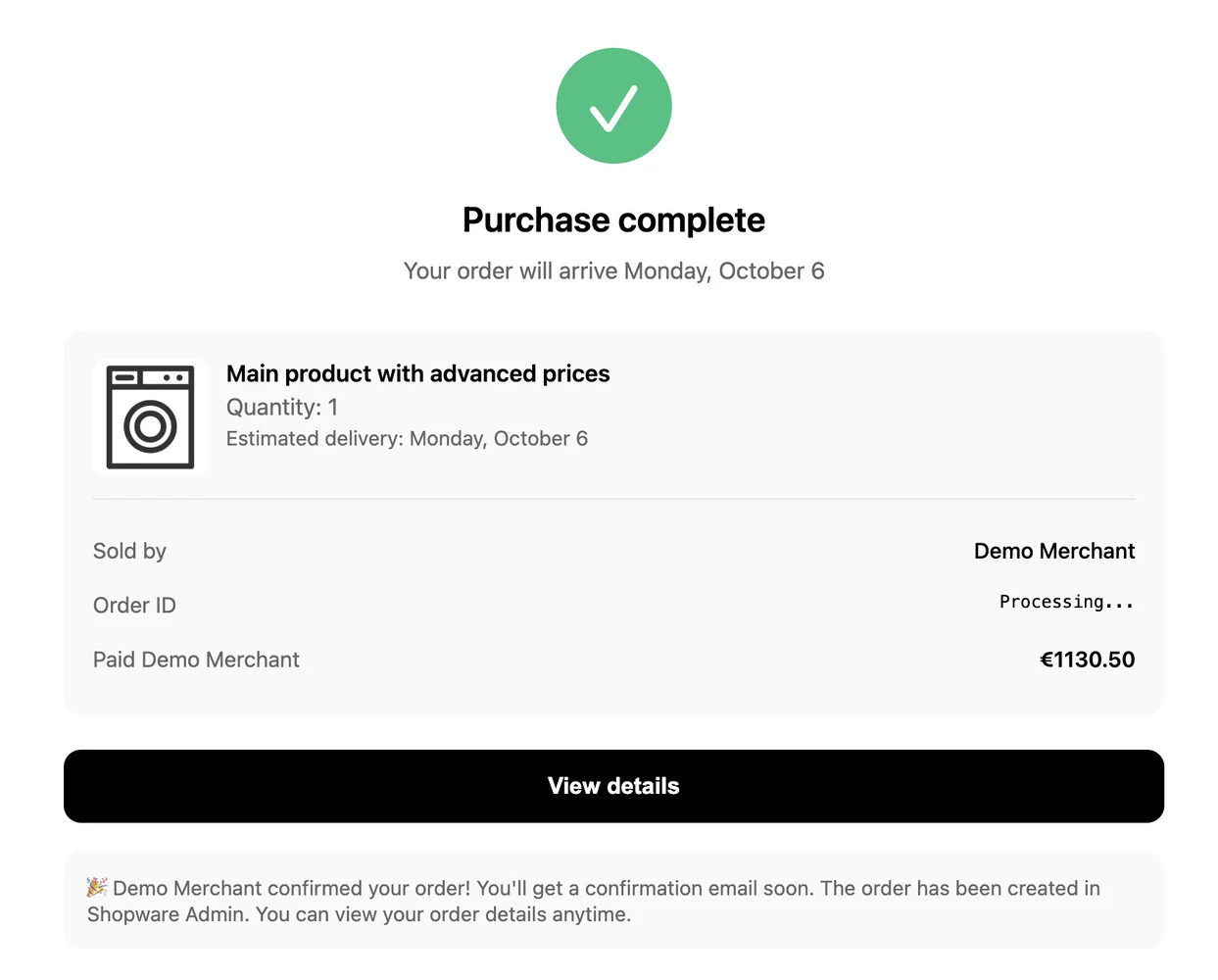
Screenshots of the suggested flow:
The PayPal connection: exact names and why we chose them
Our prototype bridges ACP to PayPal Advanced Credit and Debit Card (ACDC) through the Shopware PayPal plugin. ACDC gives us direct card processing without redirect gymnastics, which suits agent workflows where there is no human to complete a pop up. For tokenization and later charging we use PayPal’s Payment Method Tokens API.
To make PayPal truly agent ready we align with PayPal’s Agent Toolkit, a developer offering that packages core PayPal capabilities for agent frameworks. PayPal is also publicly engaging with AP2, the Agent Payments Protocol, which aims to standardize secure agent to merchant transactions across the ecosystem and where we also implement an integration in shopware.
Bottom line: ACDC for reliable card capture, Payment Method Tokens for safe vaulting, and the Agent Toolkit and AP2 as the forward path for agent native payments.
How it works (flow, not fluff)
From agent intent to paid order:
- Delegate payment
- Create checkout session
- Complete
Two operating modes
- Demo mode: simulated card tokens for click through demos, full ACP surface, no external payment required
- Production mode: PayPal sandbox with real vault tokens and ACDC capture, no customer login required
What this means for merchants
- Sell through agents without adding a new storefront or switching processors
- Keep control of catalog, pricing, tax, fulfillment and the customer relationship
- Reduce friction to near zero: an agent can discover a product and complete payment in seconds
- Use what you already run: Shopware admin, reporting and extensions all stay in the loop
Where ACP fits in the bigger picture
ACP standardizes the transaction conversation between agents and businesses. It is already live in ChatGPT Instant Checkout and designed to work beyond Stripe as our prototype here shows. For platforms like Shopware this is oxygen: a single integration unlocks a growing universe of agents and payment rails.
Payments themselves are modular. Google’s Agent Payments Protocol (AP2) is emerging as the vendor neutral specification for agent driven authorization and settlement. PayPal has publicly stated its intent to support AP2, which is good for merchants who want choice.
The next layer: Agentic Experience Protocol (AXP)
Transactions are necessary. Differentiation is everything. AI agents do not respond to slogans. They respond to structured value: evidence, performance, availability, risk.
That is why we are building the Agentic Experience Protocol (AXP) within the Agentic Commerce Alliance. AXP defines rich, machine readable experiences and trust signals that sit above ACP:
- Experience capsules for 3D, AR and configurators that run safely in agent sandboxes
- Trust evidence with cryptographic signatures and third party enrichment
- Intent and KPI signals that help agents choose you for measurable reasons
- B2B semantics like MOQ, price tiers and Incoterms so agents can actually do procurement, not just browse
Think of ACP as the checkout rails and AXP as the brand and product intelligence that tells an agent why your offer is the right one. Together with AP2 on the payments side, they form a complete stack for agent driven commerce.
The first release of AXP is planed in this month.
The Alliance behind it
We launched the Agentic Commerce Alliance to move beyond slideware: open protocols, reference code, neutral governance and a talent exchange across member R and D teams. The goal is simple and ambitious: autonomous, ethical and accessible AI as the default engine of commerce. No lock in, no black boxes, and full respect for data sovereignty.
If your platform, brand or tool team wants to ship real agent features, not press releases, join us.
Getting hands on
- Kick the tires: run the Shopware ACP plugin in Docker, use demo mode to see agent to order in under a minute
- Turn on PayPal: add your sandbox credentials and watch production mode charge vaulted cards through ACDC
- Extend: wire in your shipping calculators, tax rules, promotion engine and custom fields
ACP is open and moving fast. We will track the spec, contribute where it helps, and keep the Shopware implementation current as the ecosystem matures.
Why this matters
Agents will not end commerce. They will end copycat commerce. The winners will be the merchants whose data, trust and experiences are legible to machines and delightful to humans. ACP gets you transacting. AXP helps you stand out. PayPal, AP2 and the broader ecosystem ensure you can pay and get paid anywhere.
If you want to experiment with us, contribute code, or co design profiles for retail or B2B, reach out. The work is public, the roadmap is ambitious, and the door is open.
— Stefan