Introduction:
This is not your typical founder story. No unicorn pitch decks, no “we were broke, now we fly jets”.
Just two brothers, one wild idea, a grandmother who ran her living room like a silent operating system and the long road from a dusty storage room to one of Europe’s most open commerce platforms.
If you’ve ever built something because you had to, not for money, fame or exit, but because the world didn’t yet offer what you needed 👉 this is for you.
1 | The Beginning Wasn’t Glamorous. It Was Ours.
It didn’t start with a VC call. It started with a blinking cursor and the smell of toner.
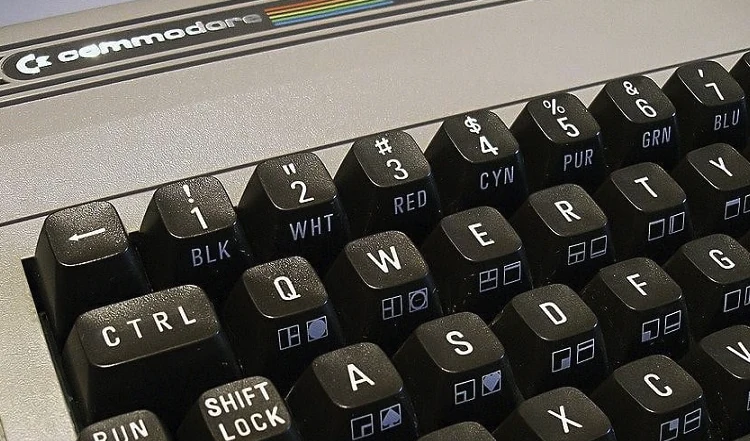
Back then, I was just a teenager with an old C64, hungry for logic in a world that often felt anything but. I didn’t understand adults, but I understood this: If I typed something into this machine, it gave me a clear, testable answer.
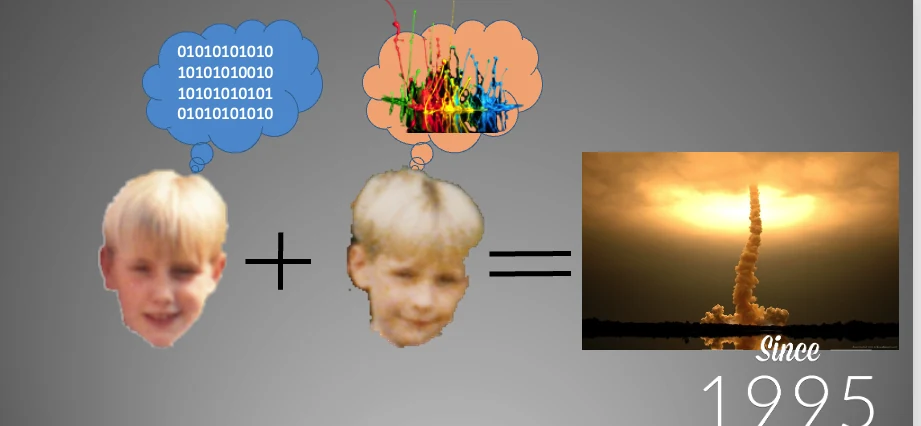
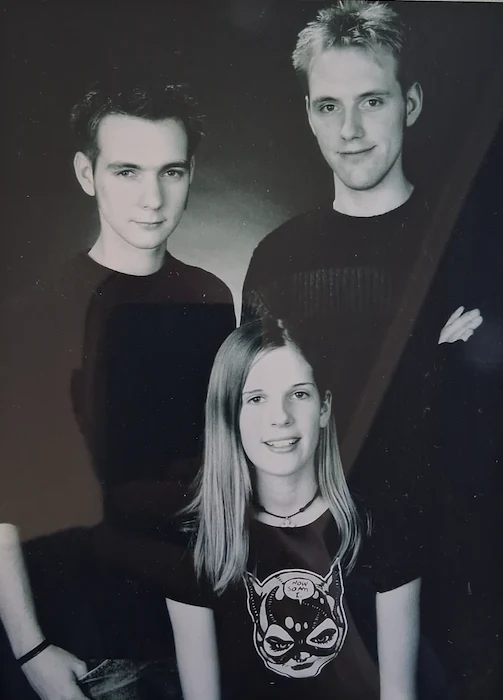
My brother Sebastian and I were opposites in some ways, but in the same orbit. He had an eye for form, rhythm, and people. I had a mind that worked like a graph, nodes, rules, cause and effect.
He brought warmth and intuition. I brought recursion and edge cases.
What we shared was obsession. And trust.
Shopware didn’t start in a boardroom but with a handwritten letter to the guardianship court.
I was sixteen and needed legal approval to register a business. That was the official beginning.
From that point on, Sebastian and I started building, between school hours, without a cent of capital, no safety net, no pitch deck. Just code, curiosity, and the feeling that commerce should be something you enjoy, not endure.
Step by step, client by client, bug by bug, we turned those after-school scripts into something real. Something people could use. Something we could be proud of.
2 | Our First Office Had Linoleum and a Soul
We worked out of a storage room behind my uncle’s office-machine shop. No sunlight, no startup vibes, just an ISDN line and a rattling coffee machine that sounded like it might become sentient any day.
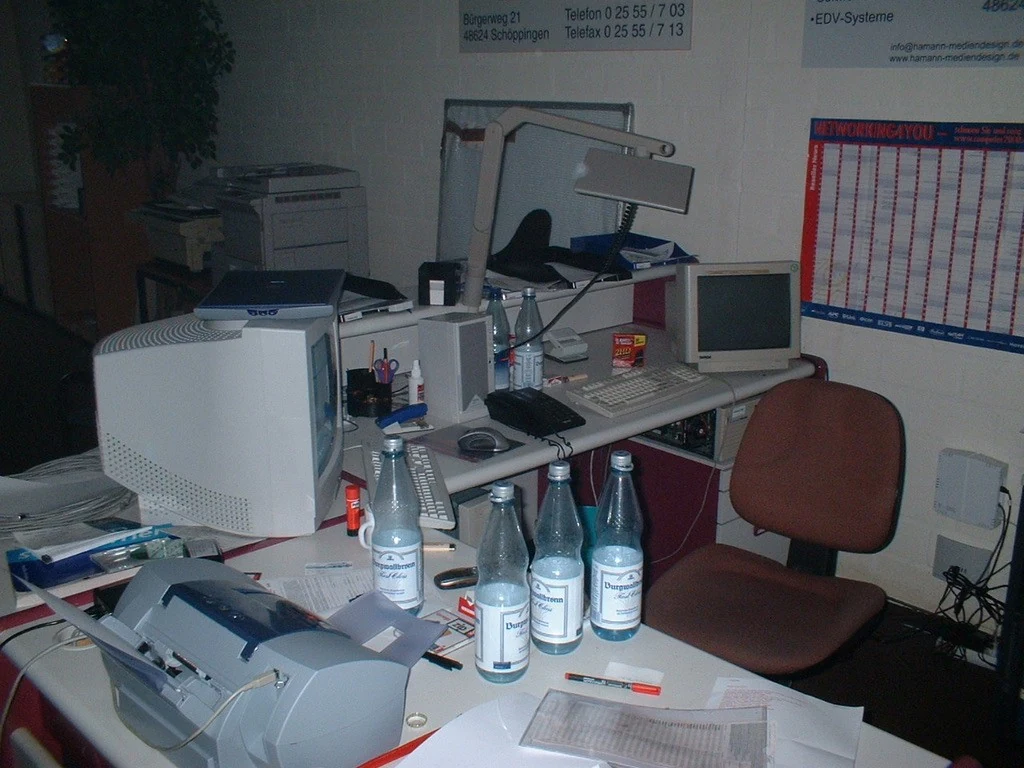
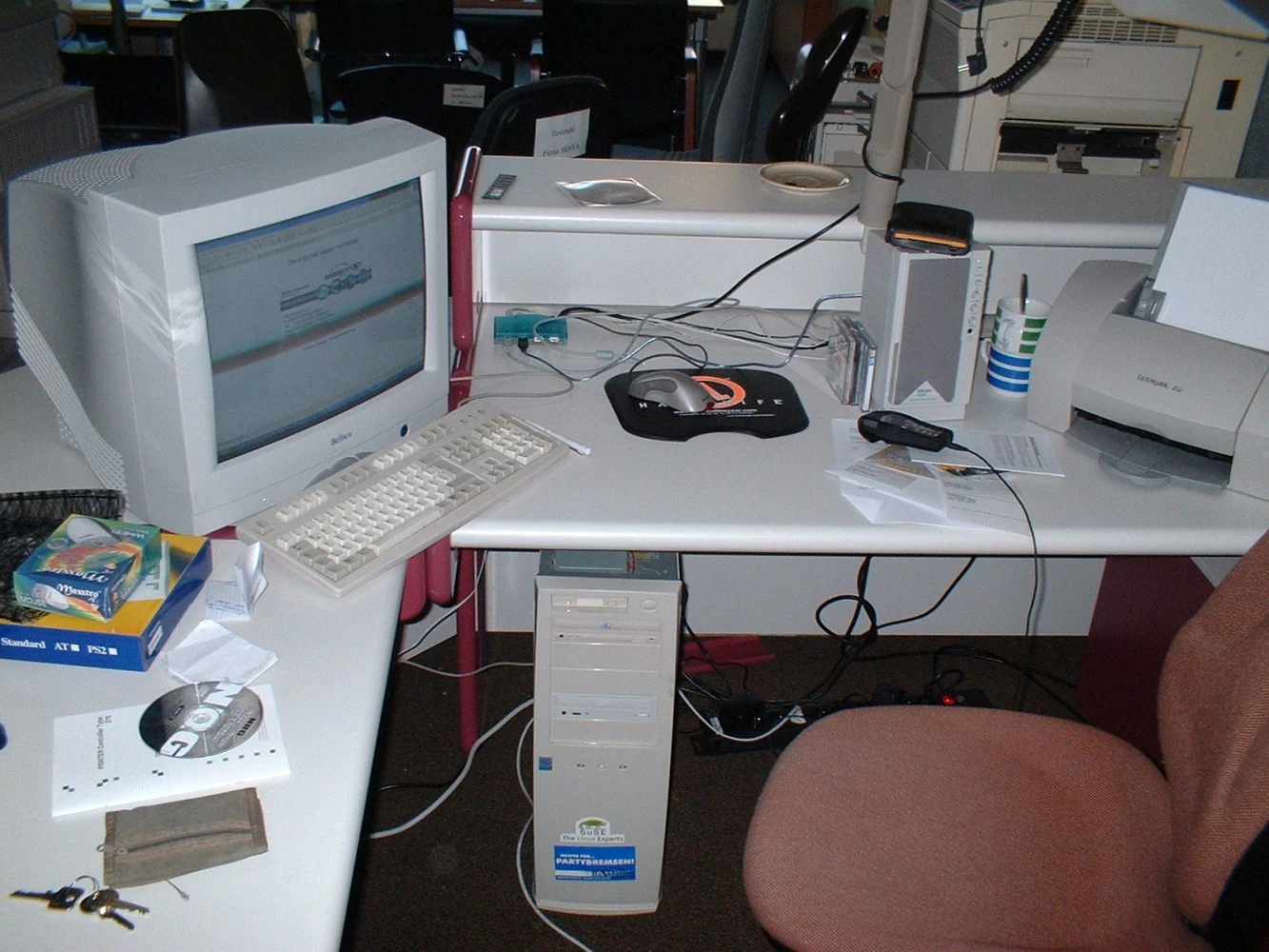
My father helped us carry in the desks. He didn’t say much, but as he looked around, he just nodded, tapped the power strip and said:
“Wenn’s knallt, zieht den Stecker.”
That was his way of saying: I believe in you. Just don’t burn the house down.
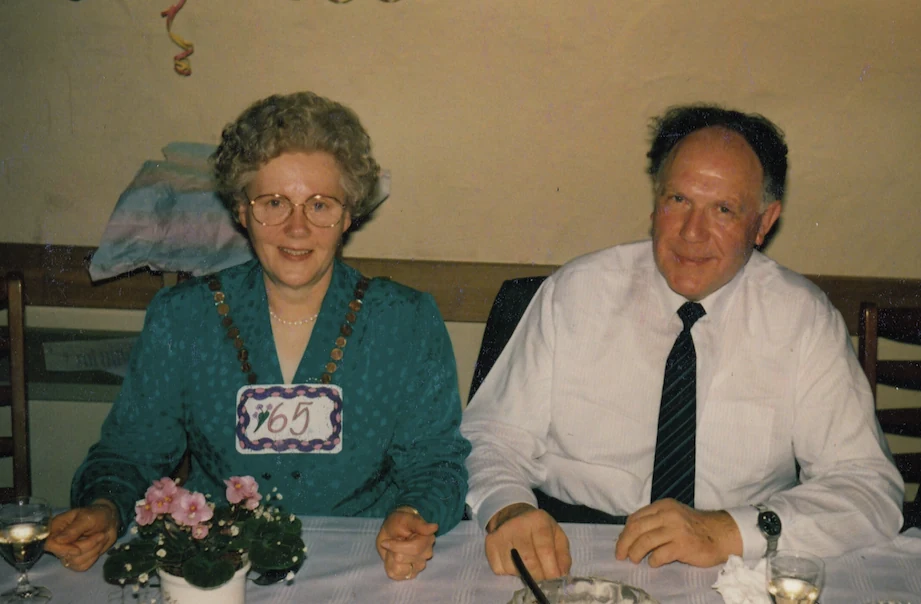
And then there was our grandmother.
She didn’t write code, but she defined our operating system.
Our grandmother shaped our culture long before we had words for it. Not with big speeches, but with quiet consistency. Her rules were never written down, but they still hold up better than most strategy decks:
→ Keep your promises. Even the small ones. Especially the small ones.
→ If something matters, take care of it before you’re asked.
→ Don’t raise your voice. Raise your standard.
→ Be generous with effort, not excuses.
→ Money you haven’t earned isn’t yours to spend.
→ Coffee is served at two. Everything else can wait.
3 | Why We Never Chased the Silicon Valley Playbook
We didn’t bootstrap because it was fashionable. We did it because we didn’t had a choice and because it never occurred to us to take shortcuts. Every cent we earned went back into the product, into the people who believed in it, or into whatever kept us going at 2am, whether that was caffeine, code, or pizza.
In those years, every release felt like a bet. Every bug fix meant a night shift. We weren’t optimizing for valuation. We were building for survival, with an unreasonable level of care.
What kept us going wasn’t just stubbornness. It was a belief in something deeper: that great software should feel like clarity, not control. That commerce systems should bend to their users, not the other way around. That platforms should widen the horizon and not tighten the grip.
We believed in open. Not just in source code, but in how we treated partners, customers, even competitors. We didn’t see ourselves as gatekeepers. We wanted to be enablers and builders of infrastructure, not moats.
And if you’ve ever wondered why Shopware feels different, here’s why.
It wasn’t designed to impress investors.
It was designed to empower the people who rely on it.
That has never changed. And it never will.
4 | Control Has a Cost
For a long time, I thought staying close to everything would keep things safe. I wanted to understand every architecture detail, every ticket, every customer issue. But the truth is: when you try to control everything, you end up paying for it, with your time, your clarity, your health.
Twelve-hour days at the desk feel productive. But if you don’t build structures that shift ownership and trust to others, you’re not scaling but just coping.
It took me a while to see that. And to accept that leadership isn’t about knowing everything, but knowing what matters. Saying “no” more often. Protecting the big picture instead of drowning in detail.
Sebastian brought in people who didn’t just follow, they challenged. And I’m grateful for that. Because their honesty helped me question my own beliefs, and let go of habits that didn’t serve the company or myself.
I’m still learning, but one thing is clear:
The smarter path isn’t always the harder one & trust, when shared right, is a multiplier.
5 | The Power of Being Two
People sometimes ask how it’s possible? Two brothers, one company, and not a single explosion?
The truth is: it doesn’t always work smoothly. But it always moves forward. Because we never tried to be the same. We knew early on that our differences weren’t a bug, they were the architecture.
Sebastian brings depth, design, emotion. He sees how things feel, how they land, how they’re experienced. I come from structure, logic, systems and I think about how they scale, how they evolve, how they survive the next ten iterations.
He grounds the product in meaning. I push it toward possibility.
He reminds me that software needs soul. I remind him that soul needs syntax.
That balance, sometimes messy, often dynamic, is what made Shopware real.
Not one mind doing everything, but two very different minds building one shared vision.
And that’s still how we work today.
6 | From Westphalia to the World (Without Losing the Plot)
After more than two decades of independence, we made a deliberate move. In 2022, Carlyle and PayPal joined us, not because we wanted out, but because we wanted to go further than we could alone.
The world was shifting. AI moved from labs into workflows. Interfaces became spatial. Commerce stopped waiting for users to click and started acting on intent.
We knew our engine was strong, but it wasn’t built for long-haul flight. So we brought in partners who could help us refuel mid-air, without changing our destination.
They didn’t demand a pivot. They didn’t send in a playbook.
They asked sharper questions. The kind you stop asking when you’ve been running too long on instinct.
What makes you unmistakable in five years?
Where do you spend energy that returns nothing?
And what part of your story is still yours to write?
That was the real value. Not capital, but clarity.
We stayed Shopware. Open in code and mindset. Authentic in how we show up. Visionary in how we think ahead.
Only now, we move faster. Think bigger. Dare bolder.
Because when you keep the map, the right partners don’t steer, they help you fly.
7 | What Still Matters
The world moves faster than ever. Models scale in minutes. Interfaces become more fluid. Agents start to negotiate. But some truths stay stubbornly, beautifully analog.
No algorithm builds real trust.
No agent on the planet can create emotional connection between people.
And sometimes, five honest minutes at an event teach you more than thirty meetings or fifty slide decks ever could.
That’s why we still believe in people first. In conversations over control panels. In communities that don’t just use the product, but shape it.
It’s the same spirit our grandmother quietly lived:
Show up when it counts. Mean what you say. Don’t act bigger as you are.
Open isn’t just about source code—it’s about posture.
Authentic doesn’t mean perfect—it means real, consistent, human.
And visionary isn’t a buzzword, it’s the courage to imagine better systems, but also to keep them grounded in human needs.
That’s what Shopware stands for.
Not because it’s trendy. But because it’s true.
And because in all this change, one thing hasn’t:
Commerce is still about connection.
And we’ll keep building for the people who make that real.
8 | The Future of Commerce Is Ours to Shape
"Handel ist Wandel"
Always has been. But right now, the speed of change is something else.
AI is no longer a buzzword on keynote slides. It’s in our tools, our decisions, our customer journeys—faster than anyone imagined five years ago. Every day, there’s a new product launch, a new model, a new headline promising to reshape how we work, sell, discover.
And yet, amidst the noise, one truth remains: the future of commerce doesn’t write itself.
We do. As builders, merchants, designers, architects, communities.
That’s why we’re here. Not just as a company, but as people.
To shape what comes next, together.
I’ll be honest: writing isn’t my favorite thing. I’d rather ship than talk about shipping. But in times like these, where clarity is scarce and signals get drowned in noise, it feels more important than ever to share early learnings, rough edges, working models—before they’re perfect.
We’re not spectators in this shift. We’re contributors.
That’s why I started putting thoughts, frameworks, and tools under one roof at
If you’re serious about where commerce is going next—beyond funnels, beyond clicks, toward intelligent, autonomous flows—I’ve distilled everything into a lean Cheat Sheet. Strategy, code patterns, KPIs, and architecture hints. No fluff. Just what you need to start building.
9 | Thank You 💙 and See You in Cologne
To my brother, my family, our team, our community.
To every stubborn, creative, "no-BS" person who ever filed a bug, asked the uncomfortable question, or built something on top of our platform
Thank you.
To the ones who criticized us fairly:
you helped us grow.
To the quiet ones who kept pushing when no one was watching:
you held it all together.
To the ones who still believe that software can be both powerful and kind:
you’re the reason we do this.
Shopware was never just a product.
It’s always been a movement.
And we’re just getting started.
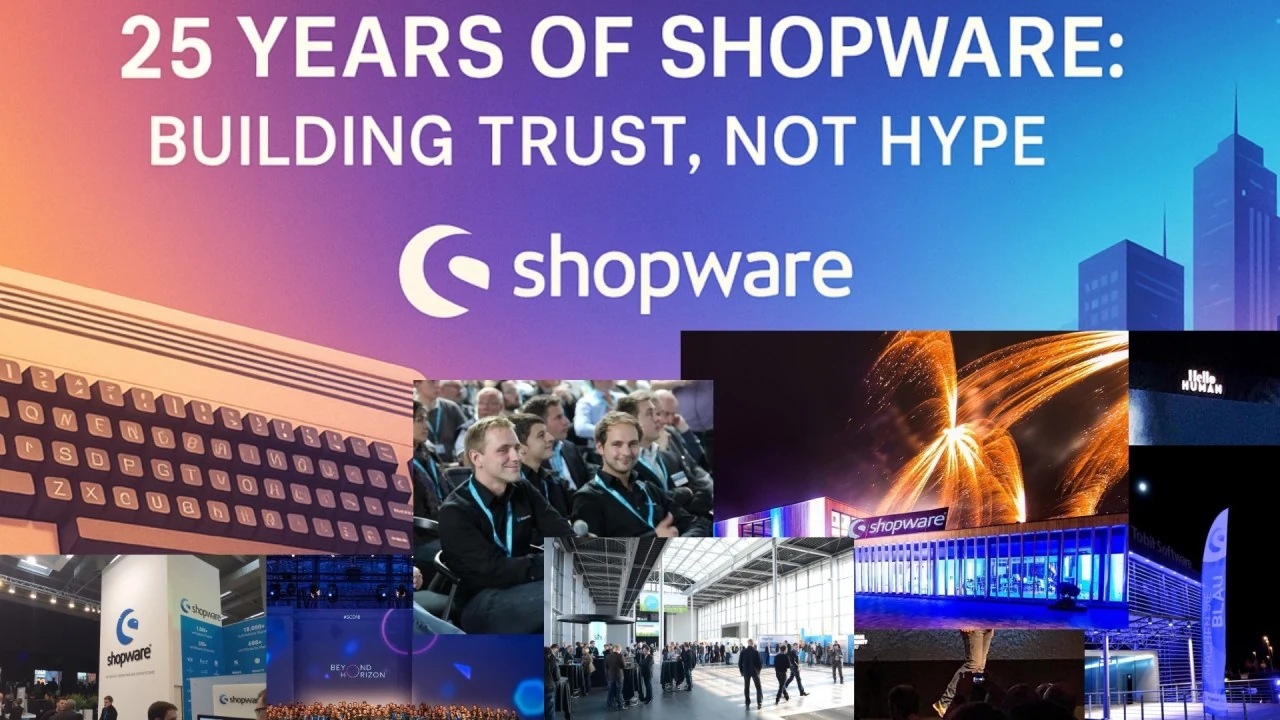
On June 4, we celebrate 25 years of learning, shipping, sweating and evolving. But more than that—we open the door to what comes next.
To new tools. New mindsets. A new era of commerce that we’ll shape together.
Come join us at Shopware Community Day 2025 in Cologne:
The code is on us. The coffee’s on me.
Let’s build the next 25 years of commerce. Not louder. But smarter. More open. More human. And maybe even a little crazy.
See you there.